Understanding Zoning Laws in India: Industrial vs Commercial vs Agricultural Land
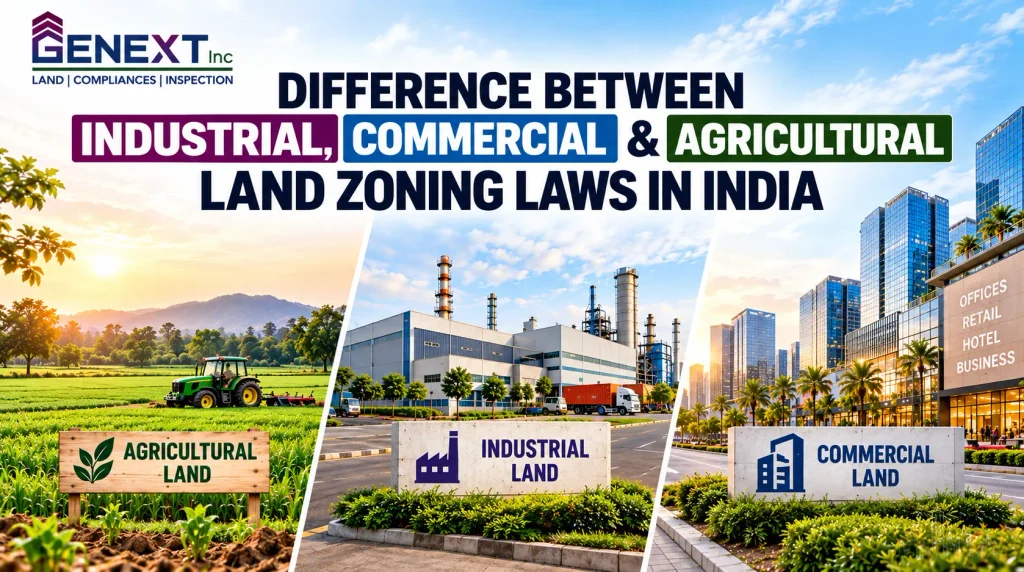
Zoning laws play a critical role in shaping real estate development in India. Whether it’s setting up a factory, warehouse, office space, or residential project, the permissible use of land is determined by zoning regulations defined under local master plans and development authorities.
For developers, investors, and landowners, understanding the difference between industrial, commercial, and agricultural land zoning is essential to avoid legal complications, approval delays, and financial risks.
This article provides a clear breakdown of these zoning categories and their implications for real estate and industrial development.
What Are Zoning Laws?
Zoning laws are regulations that define:
- How land in a particular area can be used
- What type of construction is permitted
- Building height, density, and usage restrictions
These laws are governed by:
- State town planning departments
- Development authorities
- Local municipal bodies
Each region has a Master Plan or Development Plan that outlines zoning classifications.
1. Industrial Land: Purpose and Key Characteristics
What Is Industrial Land?
Industrial land is designated for:
- Manufacturing units
- Factories and processing plants
- Warehousing and logistics hubs
- Industrial parks and SEZs
Key Features
- Located in designated industrial zones or corridors
- Allows heavy machinery and large-scale operations
- Requires multiple regulatory approvals (pollution, fire, factory licenses)
- Often supported by infrastructure such as power, roads, and water supply
Compliance Requirements
Industrial land typically requires:
- Change of Land Use (if converted from agricultural)
- Environmental clearances
- Pollution control approvals
- Utility permissions (power, water, drainage)
Challenges
- Strict compliance norms
- Location restrictions near residential areas
- Environmental regulations
2. Commercial Land: Purpose and Key Characteristics
What Is Commercial Land?
Commercial land is used for:
- Offices and IT parks
- Retail outlets and malls
- Hotels and hospitality
- Business centers
Key Features
- Located in urban or semi-urban areas
- High accessibility and visibility
- Higher land value compared to other categories
- Designed for business and service activities
Compliance Requirements
- Building plan approvals
- Fire safety compliance
- Parking and infrastructure norms
- Local municipal permissions
Challenges
- Higher acquisition costs
- Strict building regulations
- Zoning restrictions on usage (e.g., no industrial activity)
3. Agricultural Land: Purpose and Key Characteristics
What Is Agricultural Land?
Agricultural land is primarily meant for:
- Farming and cultivation
- Horticulture and allied activities
- Rural land use
Key Features
- Located in rural or semi-rural areas
- Lower cost compared to industrial or commercial land
- Limited construction permissions
- Often fragmented ownership
Restrictions
- Cannot be used for industrial or commercial purposes without conversion
- Subject to state-specific land laws
- Ownership restrictions may apply (in some states)
Conversion Requirement
To use agricultural land for industrial or commercial purposes, developers must obtain:
- Change of Land Use (CLU) approval
- Local authority permissions
- Compliance with master plan zoning
Key Differences Between Industrial, Commercial, and Agricultural Land
| Factor | Industrial Land | Commercial Land | Agricultural Land |
|---|---|---|---|
| Primary Use | Manufacturing, Warehousing | Business, Retail, Offices | Farming, Cultivation |
| Location | Industrial zones, corridors | Urban & business districts | Rural areas |
| Compliance | High (multiple approvals) | Moderate | Low (until conversion) |
| Cost | Medium to High | High | Low |
| Conversion Requirement | Not required (if already zoned) | Not required (if zoned) | Required for non-agri use |
Why Zoning Matters for Developers and Investors
Choosing the wrong land category can lead to:
- Project delays
- Approval rejections
- Legal penalties
- Increased compliance costs
For example:
- Setting up a factory on agricultural land without conversion is illegal
- Running industrial operations on commercial land may violate zoning laws
Common Mistakes to Avoid
- Purchasing land without checking zoning classification
- Assuming conversion is quick or guaranteed
- Ignoring master plan updates
- Overlooking access and infrastructure compliance
- Not verifying permissible activities under zoning rules
Strategic Approach for Land Selection
Developers should:
- Verify zoning status before acquisition
- Check master plan and future land use
- Assess CLU feasibility (if required)
- Align land use with project objectives
- Conduct regulatory due diligence
Before acquiring or developing any land, obtaining the right regulatory approvals is just as important as selecting the right location. Learn how our Regulatory Compliance & Approvals experts can help streamline approvals and reduce project risks.
Conclusion
Zoning laws are the foundation of any real estate or industrial project in India. Understanding the differences between industrial, commercial, and agricultural land is essential for ensuring compliance, reducing risks, and enabling smooth project execution.
For developers and investors, informed land selection backed by zoning clarity is the first step toward a successful project.
Stay updated with expert insights on industrial real estate, land acquisition, zoning regulations, and compliance. Follow Genext Inc. on Facebook for the latest industry updates and practical guidance.
