What Businesses Should Check Before Leasing an Industrial Property for Lease
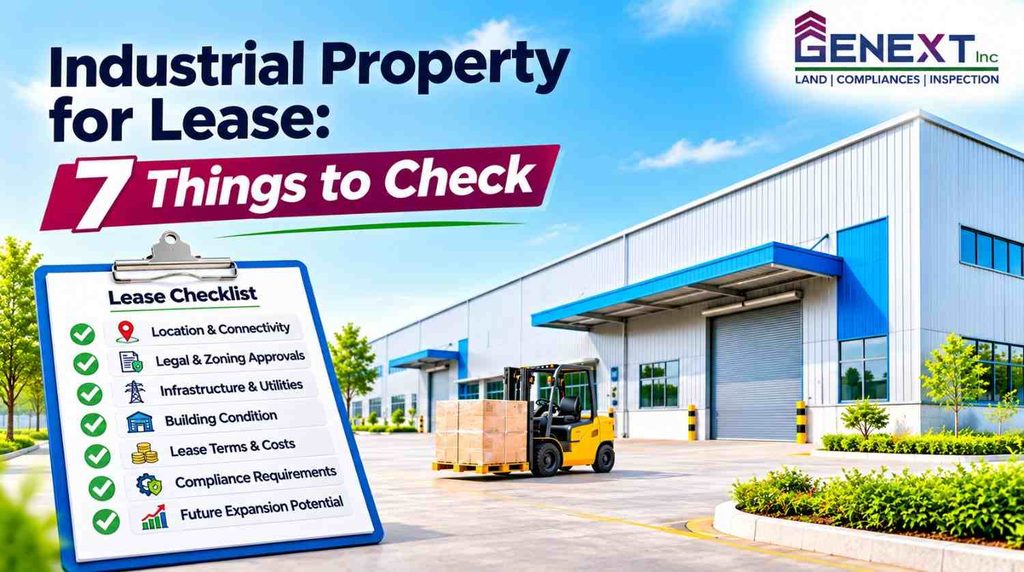
When companies are looking to start a factory, scale up production, or run their warehousing and logistics business, it is crucial to consider the possibility of leasing an industrial property for lease. The right property can help to increase operational efficiency, lower transportation expenses and help with long-term growth. But, picking just a rental price or location may result in unforeseen costs and difficulties.
Businesses exploring industrial property options can also read our guide on industrial property for business expansion: rent, buy, or build to understand the key differences between leasing, purchasing, and developing an industrial property.
Businesses need to assess the property’s legal status, allowed usage, infrastructure, access and overall occupancy costs before entering a lease agreement. These are some points that one should consider before renting out an industrial space in India.
1. Verify Legal Documents and Ownership of an Industrial Property for Lease
Check Legal Records and Ownership.Check Legal Records and Ownership. The first step is to examine the ownership paperwork and the landlord’s legal rights to rent out the property. Examine the title documents and existing land use permissions, property identification and records, and encumbrances and disputes.
If the property is in an industrial estate, please ensure you are aware of the original allotment conditions and whether they allow for leasing or subleasing. Certain industrial authorities have specific regulations for leasing industrial properties.
Some of the industrial estate policies in Haryana are such that they control the leasing of premises and specify conditions like an occupation certificate. Requirements will vary depending on the location, ownership and policy at the property. Check the rules if you’re looking to sign the lease.
2. Confirm Permitted Industrial Use and Approvals for an Industrial Property for Lease
Not all businesses will fit into all industrial properties. Different land use, building, environmental and safety requirements may be required for a warehouse, manufacturing unit, food processing plant and chemical processing plant.
Ensure that the proposed activity can be carried out at the site and that the building is approved for such activity. These can range from approved building specifications to an occupation or completion certificate, fire plans and permits, and pollution control permits, as well as others depending on the business and property.
The authorities and approvals are required in Haryana vary from site to site depending on the nature of proposed activity. Wherever applicable, refer to the Haryana Department of Industries and Commerce and the Haryana State Pollution Control Board.
3. Evaluate Location and Transportation Connectivity for Industrial Property for Lease
The location has a direct impact on daily operations and delivery schedules as well as logistics costs. Evaluate the connectivity of the property with respect to highways, industrial corridors, suppliers, customers, labour markets and transport facilities.
Businesses in the Delhi-NCR may find opportunities in regions surrounding Manesar, Bilaspur, Dharuhera, etc. where other industrial industrial areas are located.
Verify real-time travel time, road conditions, vehicle size/baxi restrictions and access restrictions for heavy commercial vehicles. Consider the ability of the approach roads to handle container trucks and frequent goods movement as well.
4. Inspect Infrastructure and Building Condition of an Industrial Property for Lease
Prior to signing the lease, check out the physical state and infrastructure of the property. Evaluate the following:
Electrical capacity: Ensure there is the required load and that it is sufficient for machinery.
Water supply and drainage: Determine availability, capacity and wastewater disposal procedures.
Heavy machinery capacity: Ensure floors can accommodate heavy machinery, storage racks and loads.
Roof and structure: Check for roof leaks, cracks, corrosion, and structural damage.
Fire safety: Inspect available fire fighting systems, fire exits and compliance standards.
Loading facilities: inspect dock access, ramps, movement within building and vehicle parking.
Have a professional inspection if needed, particularly for properties that need extensive machinery installations or renovations.
5. Calculate the Total Cost of Leasing
Rental is just one factor of your commitment. It is important for businesses to work out all the expenses of owning and running the premises.
Take into consideration the security deposit, maintenance fees, common area fees, fees associated with the property as outlined in the agreement, utility costs, insurance, fit-out costs and applicable taxes.
Include brokerage, legal, stamp duty and registration fees (if applicable). The charges are based on the nature of the lease and state regulations.
Ask for details of reoccurring or single costs in writing. This will allow you to make an informed comparison of properties and minimize the chances of unforeseen expenses when you move in.
6. Check out the Lease Terms and Exit Conditions
Carefully read through the lease before signing. Ensure that you know the length of the lease, the cost increase, when the security deposit will be returned, when you must pay rent, what maintenance is expected of you and what changes are allowed.
Be mindful of the lock-in period, termination notice, renewal clause and penalties for early exit. Define the responsibilities of those who are responsible for structural repair and failures in major equipment/infrastructure.
It should also include a commitment on whether or not sub-leasing, installation of machinery or changes to the premises needs written authorisation to be allowed. If it is a significant amount of money, seek professional legal counsel.
7. Check Utilities, Workforce Access, and Future Expansion
Determine your operational size requirements for the lease term and the property’s ability to accommodate them. Internet connectivity, power supply, water supply, worker mobility, local housing, access to services etc.
If production or storage needs are expected to grow, verify if there is extra storage space and if the building will be able to meet future operational needs.
Conclusion
When it comes to picking the right industrial space, there are more considerations than just the rental fees. Businesses need to check legal documentation and allowed use, approvals, infrastructure, connectivity, total cost, and lease conditions before committing.
The systematic assessment contributes to minimizing operational risks, managing costs, and ensuring business continuity. Always do due diligence before entering into an industrial property lease and ensure that the premises comply with both the business requirements and regulatory requirements.
Follow Genext Inc. on LinkedIn for the latest updates, industry insights, and information about industrial real estate and regulatory compliance.
