Why Pre-Leasing Inspections Are Essential for Modern Warehousing Assets
India’s warehousing sector has witnessed rapid growth over the past few years, driven by e-commerce expansion, supply chain optimization, and increasing demand for Grade A logistics infrastructure. As occupiers become more quality-conscious and compliance-driven, one practice is gaining significant importance—pre-leasing inspections.
Traditionally, inspections were conducted either during construction or post-handover. However, with the increasing complexity of warehouse operations, stakeholders are now realizing the value of inspecting assets before finalizing lease agreements.
Pre-leasing inspections are no longer optional—they are becoming a critical step in ensuring operational readiness, compliance, and long-term cost efficiency.
What Are Pre-Leasing Inspections?
Pre-leasing inspections are technical evaluations conducted before a warehouse is leased to an occupier. These inspections assess the actual condition of the property against:
- Design specifications
- Compliance requirements
- Operational needs of the tenant
The objective is to identify gaps, defects, or risks before lease commitments are finalized.
Why Pre-Leasing Inspections Are Gaining Importance
1. Rising Demand for Grade A Warehousing
Modern warehousing requires:
- High floor load capacity
- Proper flooring (FM2/FM3 standards)
- Adequate clear height
- Efficient dock systems
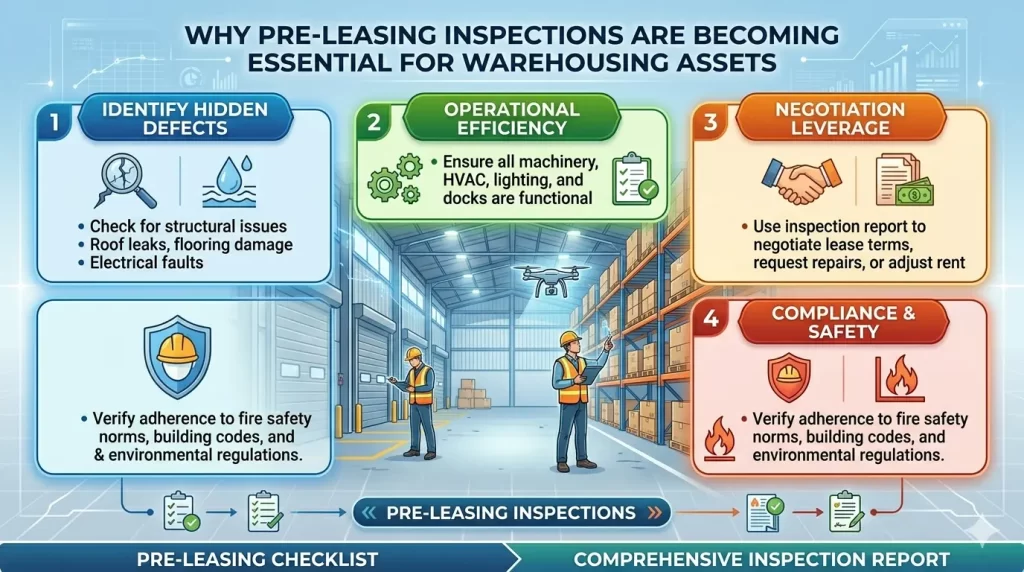
Even newly constructed warehouses may have deviations or quality issues. Pre-leasing inspections ensure that the asset meets expected standards.
2. Operational Readiness Before Occupation
Warehouses must be ready for immediate use once leased.
Pre-leasing inspections help verify:
- Electrical systems and load capacity
- Fire safety installations
- Drainage and water systems
- Dock functionality and access
Identifying issues early prevents operational disruptions after occupancy.
3. Compliance and Regulatory Alignment
Warehousing assets must comply with multiple regulations, including:
- Fire safety norms
- Building approvals
- Pollution control requirements (in some cases)
- Local authority permissions
Pre-leasing inspections help confirm that all required systems and approvals are in place, reducing compliance risks.
4. Avoiding Hidden Costs
Without proper inspection, tenants may face:
- Repair and maintenance costs
- Infrastructure upgrades
- Compliance rectifications
Pre-leasing inspections provide clarity on:
- Required corrections
- Cost responsibilities (landlord vs tenant)
- Negotiation points in lease agreements
5. Strengthening Lease Negotiations
Inspection findings can directly influence lease discussions by:
- Highlighting deficiencies
- Setting timelines for rectification
- Defining service level expectations
This leads to more transparent and balanced agreements between landlords and tenants.
6. Risk Mitigation for Large Operations
For sectors like:
- E-commerce
- FMCG
- Pharma
- 3PL logistics
Warehouses are mission-critical assets. Any failure in infrastructure can disrupt supply chains.
Pre-leasing inspections help mitigate:
- Operational risks
- Safety hazards
- Business continuity challenges
Common Issues Identified During Pre-Leasing Inspections
Typical observations include:
- Uneven or cracked flooring
- Inadequate fire safety systems
- Improper dock leveling
- Insufficient electrical load capacity
- Leakage or drainage issues
- Poor ventilation or lighting
These issues, if unnoticed, can impact warehouse efficiency and safety.
Who Should Conduct Pre-Leasing Inspections?
Pre-leasing inspections are usually conducted by:
- Third-party inspection agencies
- Technical consultants
- Facility management experts
Independent inspections provide an unbiased assessment and ensure all critical aspects are covered.
Benefits for Landlords and Developers
Pre-leasing inspections are not just beneficial for tenants—they also help landlords by:
- Reducing post-lease disputes
- Improving asset quality perception
- Attracting premium tenants
- Ensuring faster leasing cycles
Conclusion
As warehousing evolves into a highly technical and compliance-driven sector, pre-leasing inspections are becoming an essential part of the leasing process.
They provide clarity, reduce risks, and ensure that both landlords and tenants are aligned on asset quality and readiness.
In today’s competitive logistics environment, a well-inspected warehouse is not just a physical space—it is a reliable operational asset.
Looking to optimize your commercial property beyond the leasing stage? Explore our comprehensive Property Management Insights to learn how proactive maintenance, asset management, and operational best practices can help maximize the long-term value and performance of your warehouse.
Stay updated with the latest industrial real estate trends, warehousing insights, and property management tips by following Genext Inc. on Facebook. Join our community for regular updates and industry knowledge.
