
Factory Licence in India: Documents and Requirements Businesses Should Understand
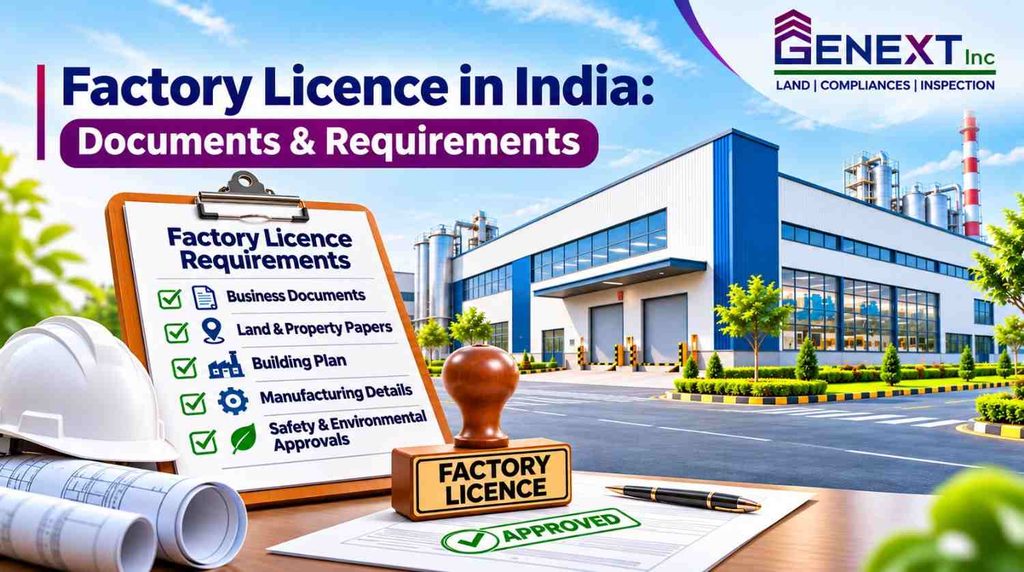
In India, obtaining a Factory Licence in India is a crucial legal requirement for companies engaged in manufacturing and industrial activities. It ensures that industrial premises meet prescribed safety, health, welfare and working condition requirements and guidelines.
Familiarizing with the factory licensing requirement in Delhi NCR and Haryana can help businesses prevent potential legal issues and delays when setting up factories, warehouses with manufacturing operations, or industrial facilities.
Businesses planning to establish or expand industrial facilities should also understand the various regulatory requirements involved in property development. Read our detailed guide on the Real Estate Compliance Checklist for Businesses Expanding to a New Location to understand the important approvals and compliance factors involved in industrial expansion.
What Is a Factory Licence?
A factory licence is an official document from the relevant Government bodies that allows a factory to run in accordance with the relevant laws and regulations relating to labour and workplace safety.
It covers important aspects such as:
- Workplace health and employee safety.
- Building and machinery arrangements.
- Ventilation, sanitation and welfare facilities.
- Fire and emergency safety arrangements.
- Compliance with prescribed working conditions.
Now India’s factory regulation framework is governed by the Occupational Safety, Health and Working Conditions Code, 2020 (OSH Code) which superseded the Factories Act, 1948, with effect from 21st November 2025.
The updated framework sets generally a factory-threshold of 20 workers when manufacturing is undertaken using power, and 40 workers when manufacturing is undertaken without power. It’s also important for businesses to also review current state rules and notifications prior to opening their doors.
Which Businesses Need a Factory Licence in India?
Typically, the premises where manufacturing processes are conducted and the prescribed worker thresholds are attained are required to be licensed.
Examples include:
- Manufacturing Units: Auto, Electronics, Machinery, Textiles and Consumer Goods.
- Food Processing Units: Units engaged in food manufacturing, food packaging and processing.
- Pharmaceutical Units: Industrial premises making medicines and pharmaceutical products.
- Chemical Industries: Plants creating chemicals, paints, industrial material and related products.
- Business Units: Companies that deal with manufacturing, commercialising metal products and machinery.
Requirements are dependent on the nature of the activity, power used and the number of workers. There may also be specific Environment, Fire Safety and Industry approvals which are necessary for certain activities.
Documents Required for Factory Licence in India
The documents required are subject to change depending on the state, factory category, manufacturing activity and applicable rules. But there are some basic business documents that should be prepared in general:
1. Business Registration Documents
- Certificate of Incorporation for private companies (Limited by Shares).
- Deed of trust or will of the trustees in respect of trusts.
- Registration certificate of the LLP (as applicable).
- PAN number of the business entity.
- GST Registration Certificate (if applicable).
2. Title or Occupancy to Land.
- Sale deed / Ownership documents.
- Lease or rent agreement (registered).
- Land allotment letter, if the property is allotted by an industrial authority.
- Address of the property and land identification information.
- Land use licence or zoning documents.
3. Factory Building Plan
- Site layout plan.
- Plans for buildings and floor layout.
- Machinery installation layout.
- Information on entrances/exits and emergency evacuation routes.
- Structural drawings and other technical details (as required).
4. Occupier Details and Manager Details.
- Occupier’s identity and proof of address.
- Proof of identity of the factory manager along with address proof.
- Information about directors, partners or proprietors.
- Where applicable, a resolution or authorisation from the board and/or their members to designate the occupier.
5. Manufacturing Process Details
- Information on manufacturing operations.
- Manufacturing process flowchart.
- List of raw materials.
- Details of machinery and equipment.
- Capacity of workers (Estimated).
- Details of electricity consumption and sanctioned power load.
6. Safety and Environmental Documents
Further documents may be required including:
- Fire safety arrangements and relevant fire approvals.
- Plans for emergencies and evacuation.
- Health and safety policy.
- Information about hazardous materials and hazard data sheets.
- Environmental approvals and pollution control permissions (where applicable).
These documents are examples of what is provided. The relevant State authority may ask for more details when checking the application.
Factory Licence Approval Process in India
The approval process for the business should be designed, and a manufacturing facility should be constructed in compliance with that.
- Determine Industrial Site: Find appropriate industrial land or premises with a permitted land use and infrastructure.
2. Factory Plan: Lay out buildings, machinery and site plans as per applicable requirements.
3. Gather Required Documents: Business Registration, Land Ownership, Occupier Information, Manufacturing Information.
4. Apply for the Application: go through the respective state labour department or the online form.
5. Department Verification: Authority checks submitted documents and may ask for corrections, additions or inspections.
6. Get Registration and Licence: Fill out the necessary requirements and get necessary approval before starting a regulated factory activity.
Additional Approvals Required Alongside a Factory Licence in India
Other industrial permissions are not necessarily included in a factory licence. Businesses might require:
- CLU Approval: Confirms permission for the intended change in land use, where required.
- Building Plan Approval: Ensures the proposed industrial building complies with applicable building regulations.
- Environmental Clearance: Required for projects falling under the applicable environmental clearance framework.
- Consent to Establish (CTE): Obtained from the State Pollution Control Board before establishing activities covered by pollution control requirements.
- Consent to Operate (CTO): Required before operating activities covered by applicable pollution control laws.
- Fire NOC: Required where applicable under state fire safety regulations.
- Boiler Registration: Necessary for boilers covered by applicable boiler safety legislation.
The status of these approvals will be subject to the location of the project, the nature of the industry that the building serves, the construction or specifications of the building, and the environmental impact of the project.
Why Factory Licence in India Compliance Is Important
Having the necessary factory approvals before going into business can assist businesses to:
- Prevent legal hassles and fines.
- Ensure employee safety and well-being at work.
- Minimize delays in setting up a factory.
- Ensure smooth operation of industry.
- Develop investor, employee and business partner trust.
In the case of industrial projects, businesses need to confirm land usage approval, building approval and factory licensing prior to buying or leasing the property. Compliance planning can save valuable time and money for early implementation.
Conclusion
One of the key elements in setting up a compliant manufacturing facility in India is obtaining a Factory Licence in India. Employers should understand the requirements of the OSH Code, complete all necessary documentation and obtain the required approvals from the appropriate authorities. Proper planning helps businesses create safer workplaces, minimise regulatory risks and operate their industrial facilities with confidence.
Follow Genext Inc. on LinkedIn for the latest updates, insights and guidance on industrial land, real estate approvals, regulatory compliance and industrial development in India.
