
Home Inspection vs Visual Checking: Why Professional Inspection Finds More Defects
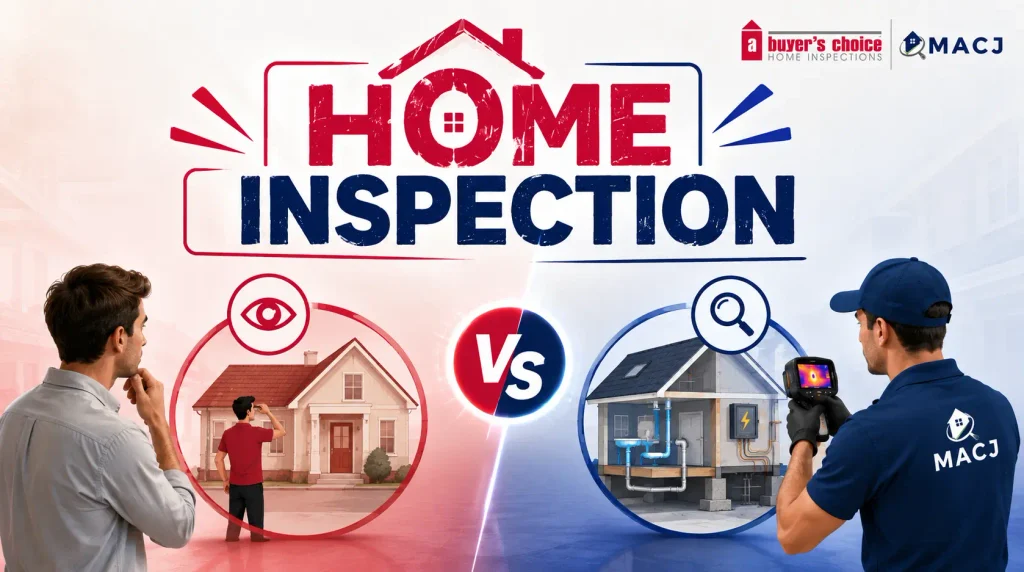
Home inspection vs visual checking the purchase of a home is a substantial investment and most buyers will want to view the home before deciding to purchase it. But, there is a huge difference between walking through a dwelling and a professional inspection to assess for visible issues.
Home inspection vs visual checking isn’t just about spending more time looking at a home. The actual difference is in how defects are identified, with the methods, tools, experience and technical knowledge available for defect identification. A house can appear to be flawless when the prospectors and buyers are just looking around, but contain moisture, electrical, plumbing, structural or construction issues.
That’s why professional inspection can reveal problems which are not apparent by visual inspection.
What Is Visual Checking?
The most common examination that a homeowner or buyer does when going through the house is the visual checking. Examine walls, ceilings, floors, doors, windows, bathrooms, and electrical fittings to check for damage.
It can be useful for detecting apparent problems like:
- Cracked walls
- Stained ceilings
- Broken tiles
- Visible water leakage
- Damaged doors or windows
- Peeling paint
- Loose fittings
- Poor finishing
The trouble is, there are lots of home problems that aren’t instantly apparent. It may appear that a wall is just painted, but the moisture is behind the freshly painted surface. An electric plug can look fine and the wiring within the socket can be a problem.
Visually checking can therefore be a good initial impression but it cannot match the level of assessment that can be carried out by a professional inspection.
What Does a Professional Home Inspection Include?
A professional inspection is a thorough review of accessible components and systems of a property. A professional inspector is familiar with the areas where defects are likely to occur and the signs to watch for.
The areas inspected could include:
- The quality of civil and construction works.The quality of civil and construction works.
- Walls, ceilings, and floors
- Plumbing systems
- Leakage and seepage of water.
- Work involving the wiring or visible wires.Work with electrical systems or visible wiring.
- Doors and windows
- Waterproofing
- Moisture levels
- Finishing and fittings
- Safety-related concerns
But, professional inspectors can also use special tools like moisture meters, thermal imaging cameras and other inspection tools to look into areas that can’t be assessed by just looking with the naked eye.
Home Inspection vs Visual Checking: What Is the Difference?
The single major distinction is how deep the assessment is.
Visual checking primarily responds to the question of “do you see anything wrong?”
Professional inspection also asks the question: “Is there evidence of a defect, hidden moisture, poor workmanship or potential problem that cannot be seen?
There are a few significant differences here:
- Visual Checking
- Professional Inspection
- Relies mainly on eyesight
- Works systematically to check things out
- Finds obvious defects
- Is able to detect obvious and hidden warning signs
- Limited technical knowledge
- Carried out by qualified personnel
- Typically no special equipment is required.
- May use diagnostic inspection tools
- Quick property walkthrough
- Detailed inspection process
- Focuses on appearance
- Considers condition, performance and risks
The difference is especially significant when purchasing a newly built home or when moving in to a home.
Why Professional Inspection Finds More Defects
1. Hidden moisture can go undetected.
One of the most frequent problems homeowners encounter is in relation to water. Moisture may be trapped behind walls, under the flooring or around plumbing connections, and will not leave a visible stain.
A professional inspector will be able to use moisture detection equipment and systematic checks to determine areas that may need further investigation.
Problems like dampness, mould growth, damaged finishes and deterioration of building materials can be avoided if they are detected early.
2. Not all electrical problems are obvious.
A switchboard, socket or electrical fixture can appear perfectly normal on the outside. This does not necessarily indicate that the electrical installation is safe or in proper operation.
Professional inspections can uncover warning signs like faulty fittings, exposed wiring, poor connections and other readily visible issues.
This is especially crucial that for homeowners, since electrical problems can result in a danger to safety that is not apparent in the typical home walkthrough.
3. Poor construction quality, or they may simply be hidden.
It’s possible for a property to look great on the outside, have great paint, floors, and interior, but have construction quality problems below.
These issues may be beyond the scope of an untrained person and can be encountered in problem areas such as finishing, irregular surfaces, tile application, doors and windows, building connections, plumbing fittings and other areas.
A professional inspector looks at more than the appearance of the property, and will follow a structured approach.
4. Badly behaved or poorly designed code can cause serious problems.
The most benefit of a professional inspection is to detect it early on.
If you notice a small stain on your ceiling, it may be a sign that you are having a leakage issue. If a minor crack is found, it may need to be monitored or assessed further. Over time, water may leak from the plumbing system and result in water damage.
If these problems are identified early on, homeowners can record them, ask to have them fixed or arrange for them to be fixed before the issue escalates to a higher cost.
When Should You Get a Professional Home Inspection?
A professional inspection is particularly beneficial at critical times of a property being owned.
Before Buying a Property
Inspection can give you more information about the condition of a resale or newly constructed property, before you decide to buy.
For industrial and warehouse properties, inspection is equally important before signing a lease, as hidden building issues can affect safety, operations, and future costs. Read our guide on Key Inspection Points for Industrial & Warehouse Spaces.
Before Taking Possession
A pre-handover inspection in a new apartment or house can find faults and defects to be reported to the builder prior to possession or final closing.
After Renovation
Sometimes major renovations lead to defects such as finishing, plumbing, electrical or construction-related. An inspection can be used to confirm the quality of accessible work following renovation.
When You Notice Recurring Problems
If you notice that water stains, damp walls or cracks in the wall have occurred more than a couple times, or if you notice any other unusual odours, or the electrical circuit keeps tripping out, it is time for a professional examination to determine if further investigation is warranted.
Is Visual Checking Completely Useless?
No, visual inspection is still important.
When you consider buying a property, it is always a wise idea to walk through it and inspect the property’s condition. It can help you to discover blatant issues and provide you questions to pose to the builder, inspector, or seller.
But it must be noted that visual examination is not a good replacement for professional examination – particularly if the property is a major investment.
Visual checking is the first step of observation and a far more detailed inspection can be undertaken by a professional.
The Smart Approach: Combine Both
Not always the best choice is to pick one or the other.
Begin by doing your own visual walk-through. Check for any obvious problems such as cracks, stains, dampness, or damaged fittings, as well as any uneven surfaces. Then conduct a professional inspection to thoroughly explore the property’s state.
This mixture provides the shopper and homeowner with much more information prior to making a decision for the expensive fixes or accepting a house.
Final Thoughts
Home inspection vs visual checking really has to do with the extent of the information and the quality of that information. While visual inspection can reveal apparent faults, many serious faults cannot be found without the technical knowledge, systematic inspection and proper tools.
A professional home inspection will be able to reveal issues related to moisture, water leaks, electrical systems, construction quality, plumbing, and other things that can be seen.
When buying a property that is a major investment you can’t afford to be fooled by the fresh paint and beautiful interiors.
Don’t make decision based on what you can see. Have professional inspection before minor issues become major costly issues.
For professional property inspection insights and updates, connect with MACJ – A Buyer’s Choice Home Inspections on LinkedIn.
