How Road Connectivity Can Affect the Value of Industrial Land
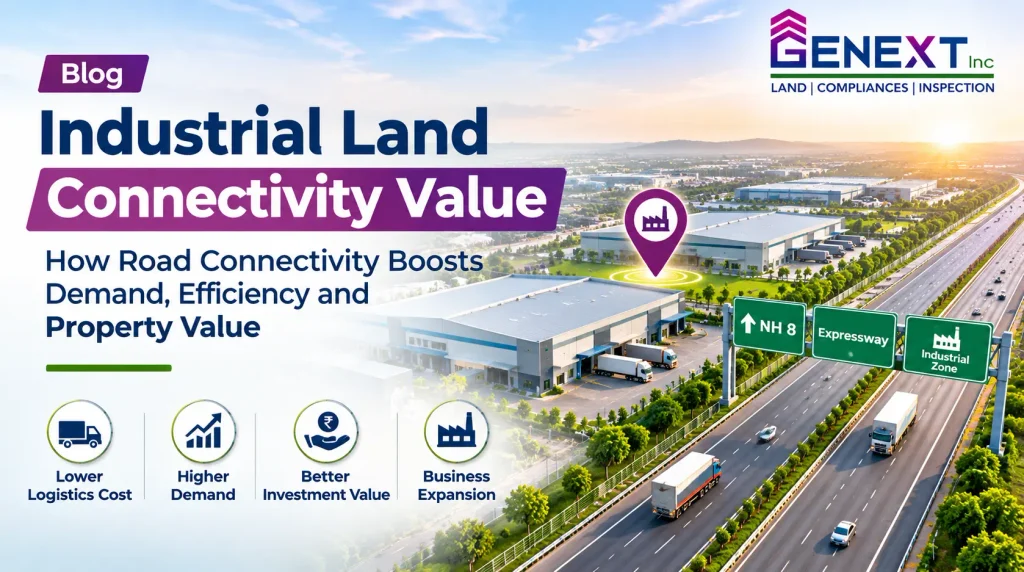
The value, suitability, and demand of industrial sites largely depend on road connectivity. Industrial Land Connectivity Value plays an important role in helping manufacturers, warehouse operators, logistics service providers, and investors improve transportation efficiency, simplify operations, and support sustainable business growth.
But being near a highway or expressway doesn’t necessarily mean the land is more valuable. Its commercial prospects are also affected by legal road access, links to key markets, restrictions on vehicle access, the quality of infrastructure and land-use agreements.
Being aware of these is important for businesses to make an informed decision before buying or investing in industrial land.
1. How Industrial Land Connectivity Value Increases Industrial Land Demand
The needs of industrial businesses are reliant on the dependability of transportation to carry raw materials, finished goods, machines and equipment. Facilities that are located along the national highway, state highway, expressway and known industrial corridors can provide accessibility to suppliers, customers, distribution centres, etc.
If several businesses are competing for land in a well connected industrial zone, there can be an upward pressure on land values. A plot in an industrial estate near Manesar, which has a good connectivity to the NH-48 could draw companies to the area serving the Delhi-NCR market.
But this is based on local need, infrastructure, permitted industrial use and individual property.
For a deeper understanding of how road access affects industrial property demand and pricing, read our guide on How Road Connectivity Can Affect the Value of Industrial Land.
2. How Industrial Land Connectivity Value Reduces Transportation Costs and Improves Business Efficiency
Transportation is one of the significant factors of industries that affect the operating costs. Bad roads, routes, access, and diversions can lead to higher fuel use, travel time, vehicle maintenance and delivery uncertainty.
Favourable road connectivity can support businesses:
- Minimize waste of effort in moving from one place to another.
- Improve delivery planning and fleet utilisation.
- Transport raw materials and products more efficiently.
- Facilitate more predictable operations in the supply chain.
- Minimize delays due to problematic access.
These benefits can make a site more desirable to potential purchasers and tenants. As businesses continue to value industrial property values for its operational efficiency, it can support the area’s property values over time.
3. How Industrial Land Connectivity Value Benefits from Highway and Expressway Access
Industrial areas are linked to cities, consumption centres, ports, airports and other industrial areas with highways and expressways. They are varied in importance depending on the business and the businesses transportation needs.
A warehouse for regional distribution networks may prefer to be near to major highways, for example, and a manufacturing plant that moves heavy machinery may need reliable paths for heavy commercial vehicles.
The connectivity to the NH-48, Kundli-Manesar-Palwal (KMP) Expressway and other major transport corridors will also play a role in site selection, depending on the destination and the route.
For businesses, consider actual journey times, interchange locations, tolls and vehicle movements permitted on a map rather than just distance.
4. Why Last-Mile Access Matters for Industrial Land Connectivity Value
Even if there is a road leading to the plot, it might still not be accessible if the road is not suitable. Last mile connectivity is the road infrastructure connecting an industrial property to the main road infrastructure.
Key Factors to Check for Industrial Land Connectivity Value Before Buying:
- Whether the approach road is legally accessible and adequately maintained.
- Whether the road width supports trucks and other commercial vehicles.
- Whether entry and exit points allow safe vehicle movement.
- Whether road access is affected by seasonal waterlogging or congestion.
- Whether any access restrictions or permissions apply.
A plot that is further away from an expressway but has good last mile connectivity may be more useful than a plot that is nearer to an expressway but has poor last mile connectivity.
5. Road Infrastructure Can Influence Future Appreciation
Access to industrial zones can be enhanced by new highways, bypasses, interchanges, and/or road-widening projects. Increased connectivity can bring in manufacturers, logistics firms and warehouse developers which could lead to a rise in demand for industrial space in the neighboring region.
But, there is no guarantee of appreciation. The effect will vary based on project completion, real accessibility, development around the project, market demand and land use laws.
There is a difference between working infrastructure and planned projects. Check on project status from official government or implementing-agency sources prior to making investment decisions based on expected infrastructure benefits.
6. Connectivity Affects Warehouse and Manufacturing Requirements Differently
The transportation requirements vary from industry to industry.
For instance, highways and major consumption centres might be important to a distribution warehouse. A manufacturing unit can be on roads that can accommodate large vehicles, availability of suppliers and an ability to deliver reliable freight movement. For businesses that deal with products that need to be moved quickly, connectivity can include access to airports or other logistics facilities.
So this is not always the closest to the main road. It is the site which meets the transport needs and operating processes of the business.
7. How to Evaluate Road Connectivity Before Buying Industrial Land
Legal, financial, and operational issues need to be considered in conjunction with road connectivity.
Follow this helpful checklist with the following steps:
- Map major routes: Identify nearby national highways, expressways, industrial corridors, and important junctions.
2. Measure real travel time: Test routes at traffic levels—both peak and off-peak.
3. Minimize vehicle suitability: Check if access roadways are suitable for vehicles your business will be using.
4. Check legal access: Check ownership, access rights, land use, permissions, and restrictions.
5. Inspect infrastructure: Road & drainage conditions, street lighting, potential bottlenecks.
6. Assess future development: confirm infrastructure projects and confirm the official status of the infrastructure project.
7. Make comparisons: Make comparisons with other similar industrial properties, taking into account location, plot size, permitted use, quality of utilities and access.
These checks provide buyers with an indication whether the asking price is a true reflection of the natural commercial strengths of the property.
Conclusion
Accessibility to industrial land through the road network can have a profound impact on demand for industrial land, its usability and value. Highway, expressway and industrial corridor connections, and reliable approach roads, can enhance logistical efficiency and property’s business attractiveness.
However, connectivity cannot be the only consideration when making an investment choice. Access to the land by law, legal access use, quality of infrastructure, local demand and total acquisition costs must also be assessed.
A comprehensive evaluation of road connectivity can be useful for businesses in Haryana or Delhi-NCR when they are in the process of acquiring industrial land, as it can help them make informed decisions about the suitability of the properties they are considering, as well as the potential risks and complications associated with their operations.
For more industry insights, updates, and professional discussions on industrial real estate and regulatory compliance, connect with Genext Inc. on LinkedIn.
