Why Location Matters More Than Size When Choosing an Industrial Property
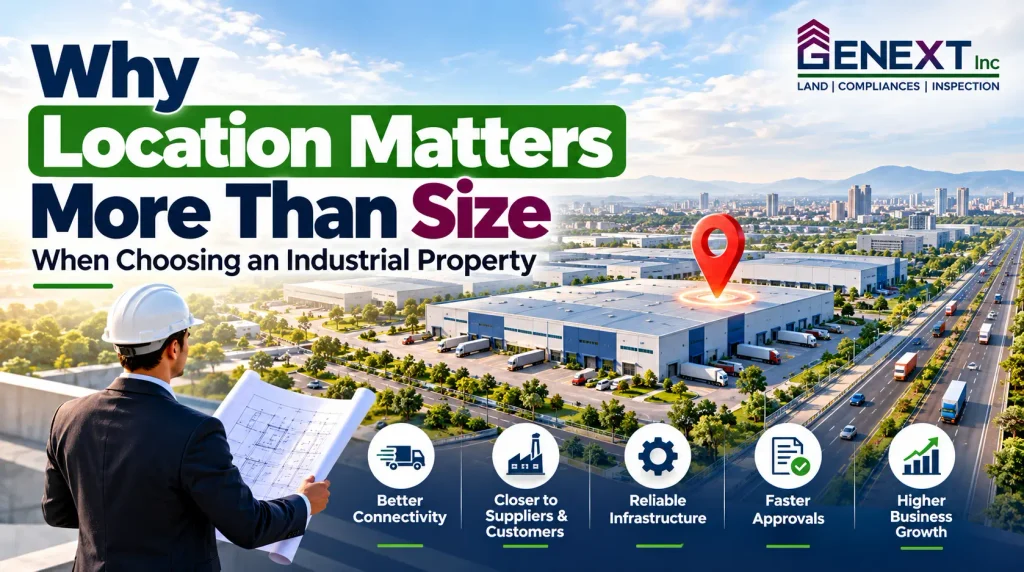
For manufacturers, warehouse companies, and logistics companies, it’s crucial to choose the right industrial property location. A larger plot may look attractive. However, location affects transportation, operational efficiency, workforce access, and future expansion.
Large industrial property with poor connectivity/infrastructure can pose operational difficulties. A smaller piece of land in an appropriate industrial area could however have more business value. By comprehending these aspects, businesses can make informed decisions when choosing industrial property in Sydney that align with their needs and budget.
1. Transportation and Logistics Efficiency at the Right Industrial Property Location
Transportation is an important factor in the operation of an industry. Raw materials, finished goods, machines, and parts are taken often between factories, warehouses, suppliers and customers.
Properties near highways, rail services, and logistics hubs can improve transportation efficiency. However, actual benefits depend on road conditions and truck access.
For instance, if the market area of the warehouse is Delhi NCR, it can be beneficial to have easy access to the major highways, not just a larger plot of land in a remote area.
The National Industrial Corridor Development Programme (NICDP) in India takes into account multimodal connectivity and logistics efficiency in planning the location of industrial facilities.
2. Proximity to Suppliers and Customers When Choosing an Industrial Property Location
It should be convenient to get raw materials to a business location and then get finished products out of the business. Frequent deliveries from suppliers are often a requirement for manufacturers, and quick access to distribution channels and markets is essential for warehouses.
Proximity to key suppliers can make for easier inventory management and less over-rotating goods. Likewise, access to large customers can help to ensure a more reliable delivery on time.
For example, if a Gurugram-based company which supplies car components to industrial belt companies, locates itself closer to its customers, it will be better off.
Identify key suppliers, customers, and distribution channels before buying or leasing industrial property.
3. Availability of Skilled Workers
Industrial companies need workers with various skills, such as machine operators, technologists, workers in the warehouse, supervisors, and logistics workers.
A property situated close to known industrial hotspots or residential areas and public transport may offer greater access to prospective employees. On the other hand, attracting and keeping workers can be tough in a remote area where there are fewer commuting opportunities.
It is important for businesses to identify the number of employees available, how far they commute, public transport options, and access to essential services before they choose a property. Having a convenient location can contribute to ease of operations and decrease the challenges for employees driving to and from work.
4. Essential Infrastructure at the Right Industrial Property Location
Infrastructure must be appropriate for the efficient operation of industrial properties. Requirements can range from electricity to water, drainage and wastewater treatment, telecommunication, and internal roads, depending on the business activity.
Just because the plot is bigger, it doesn’t automatically mean it has what’s needed for infrastructure. If essential facilities are not available, it will be necessary for businesses to make extra investments before they can operate.
For instance, a manufacturing unit that demands a large power connection should confirm whether there is a sanctioned load available at their property, whether a connection is possible and the anticipated cost of upgrading the property to meet the need.
Water availability, drainage and road access should also be checked, as should other sector-specific needs. A smaller site with adequate infrastructure might be more feasible than a larger site which needs extensive development.
5. Legal Approvals and Land-Use Suitability for an Industrial Property Location
The laws that apply to an industrial property, land-use regulations and approvals, are all affected by location. Not all land is legally capable of the activities of every industry.
Prior to investment, businesses should confirm ownership and title, permitted land use, Change of Land Use (CLU) requirements, building plan approvals and environmental permissions apply. Requirements vary dependent on the State, local authority, site conditions and proposed industrial activity.
For instance, when you buy an agricultural property you are not automatically given permission to build and run a factory on it.
Legal due diligence can help uncover any potential restrictions, further costs, and delays for approval prior to closing the purchase.
6. Future Growth and Connectivity at an Industrial Property Location
The site of an industrial establishment should be capable of adequate future expansion and meet current needs. Choosing the right site requires careful evaluation of connectivity, infrastructure and long-term business requirements. Read our guide on industrial project location to understand the key factors that influence industrial project planning and site selection.
India’s industrial corridor projects are intended to boost the manufacturing industry by establishing designated industrial zones, enhancing connectivity, and investing in infrastructure. But companies have to differentiate between operational infrastructure and only proposed or developed projects.
Prior to investing review existing infrastructure, officially announced projects, development schedules and the potential for increased operations. Reliable information should be used to assess future growth potential, not assumptions of rising property values.
7. Total Operating Cost is More Important than Size
The cost of an industrial property is more than just the purchase price. Transportation, utilities, employee commuting, maintenance, infrastructure development and compliance costs are other factors that businesses must take into account.
Let’s think about two possibilities:
Property A: A large plot of land with some road access and high level of infrastructure needs.
Property B: A smaller lot with access to a roadway, existing utilities and convenient access to suppliers and customers.
Property B could be more cost effective if it allows the company to save on operating expenses and is the right size for the business. Some businesses will truly require a bigger site if they have a need for more extensive production lines, heavy production machinery, or for future expansion.
Maximum land is not the only factor in determining the right decision; total ownership and operating costs are also important.
Conclusion
The location of an industrial property is crucial and can affect logistics, access to workers, infrastructure, legal suitability, and the efficiency of a business in the long run.
The largest and cheapest industrial premises is not necessarily the best. It is the one that is operationally suitable, has an appropriate connection, respects regulation and ensures sustainable growth.
Industrial businesses considering buying or leasing industrial land should use a systematic approach to evaluate the location, size, infrastructure, approvals and overall costs. The right location can offer a better base for effective operations and continued industrial success.
For more insights on industrial real estate and regulatory compliance, connect with Genext Inc. on LinkedIn.
