Industrial Property for Business Expansion: Rent, Buy or Build?
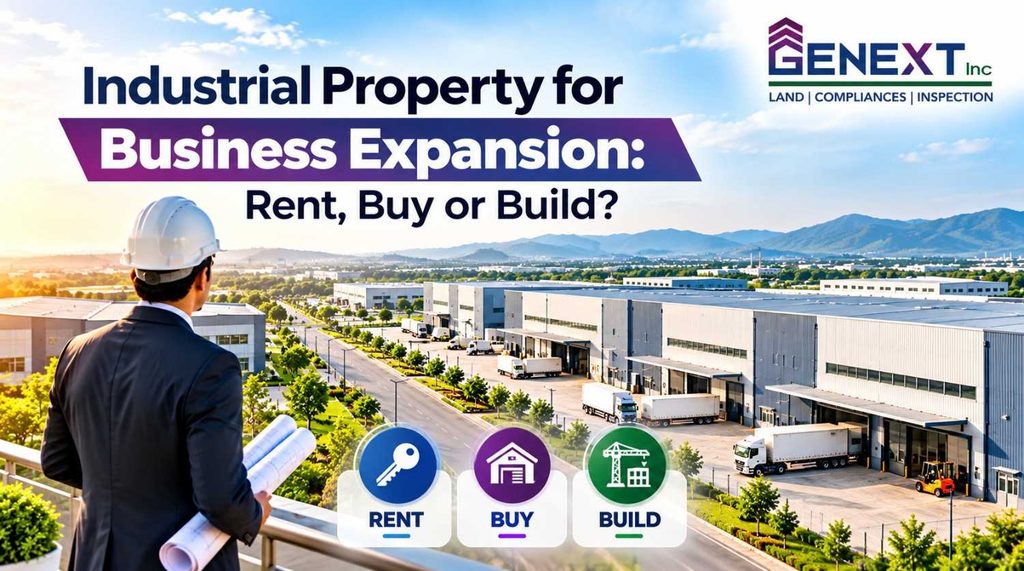
Businesses need to make an important decision when they are looking to grow their business: Selecting the right industrial property for business expansion is essential for businesses looking to increase operational capacity, improve efficiency, and support long-term growth. They need to choose an appropriate industrial property. From a warehouse to manufacturing unit, factory to distribution centre, your property choice can have a significant impact on your business operating costs, cash flow, production capacity and future growth.
There are three typical choices available for expanding businesses in Gurugram, Manesar, Bawal, Faridabad and other industrial areas of Haryana: renting a property, purchasing an industrial property or developing a facility from the ground up. Both have their own set of pros, cons and prices. You have to choose between two options based on your budget, business needs, expansion and future plans.
1. Renting Industrial Property: Flexibility with Lower Initial Investment
For companies that require extra space in a hurry but don’t want to invest much money in paying for the purchase, renting might be a better option. It enables businesses to allocate funds for other critical business operations, such as hiring staff, purchasing inventory, investing in technology, and acquiring machinery.
Benefits of Renting Industrial Property for Business Expansion:
- Lower initial costs: Businesses generally do not have the high initial cost for acquisition of industrial property, although there may be security deposits, advance rents, fit-outs, etc.
- More rapid expansion: An existing warehouse or industrial building might be available to be occupied earlier than buying a property that needs a lot of retrofitting or a new building.
- More flexibility: Rental options can be right for companies testing a new market, coping with seasonal demand or preparing for short-term growth.
- Faster relocation: Depending on the terms of the lease, businesses may have the option to relocate when the need arises.
But rentals come with their drawbacks, too. Rent is paid throughout the lease, rent can be increased as specified in the lease agreement, and businesses might not be able to make changes to the premises. The length of a lease, the right to renew it, the parties responsible for maintenance, how it can be used, and the lease’s termination rules should be examined closely.
Ideal for: Start-ups, expanding businesses, third party logistics companies and companies looking for operational flexibility or saving up capital.
2. Buying Industrial Property for Business Expansion: Ownership and Long-Term Control
For well-established companies with strong cash flow, industrial property for business expansion can be a valuable long-term investment. Buying a property provides greater control over the premises and reduces dependence on rental agreements, helping businesses plan their operations and future growth more effectively.
The benefits of purchasing are:
- Stability over time: as long as it is legally allowed and the terms of ownership, businesses can continue to run from the same premises without having to rely on the rentals.
- More operational control – the owner is normally more likely to be able to plan allowed changes, add equipment and enhance facilities as long as there is approval and legal restrictions.
- Appreciation (if any): Real estate, such as industrial property, may appreciate over time, but there is no guarantee and will depend on the conditions of the market, location, infrastructure, and demand.
- Potential financial benefits: Ownership may have strategic value in the long-term but returns should be measured against the cost of financing, maintenance, taxes and other uses of capital.
The size of the initial investment is the main difficulty. Besides the cost of the vehicle, businesses need to consider stamp duty, registration fees, legal due diligence, financing costs, property taxes, maintenance and any necessary improvements.
Confirm ownership and title documents, land-use, approved building plans, access, environmental requirements and unpaid liabilities before buying. Requirements will depend on the site, site classification and intended industrial activity of the property.
Best for: Companies that are already established, large distributors, and companies that plan to stay in the same facility for a long time.
3. Building Industrial Property for Business Expansion: Customisation for Specific Needs
For businesses needing specialised layouts, production lines, storage systems, or infrastructure that existing properties are unable to offer, then building a facility from ground up is a good option.
There are some major benefits to constructing:
- Tailor-made design: Design the layout to suit machinery, workflow, storage and loading requirements.
- Operational efficiency: Design appropriate power systems, ventilation, internal roads and material-handling areas.
- Future expansion: Allow for expansion of space for extra equipment, storage, or production.
- More control of specifications: Specify construction materials, building systems and technical characteristics based on operational requirements.
But there is a need for acquiring land or having an appropriate long term land arrangement, significant investments, project management, and time for construction. The businesses need to also consider the design expenses, building cost, utility connections and approvals.
Depending on the location and the activity proposed, various permissions applicable in Haryana are Change of Land Use (CLU), building plan approval, environmental clearances, pollution control consent etc. Check with the appropriate agencies before beginning to build.
Ideal for manufacturers, specialised industrial operators, and those that have particular facility needs and long-term expansion plans.
4. How to Choose the Right Industrial Property for Business Expansion
| Business requirement | Suitable option |
| Limited initial capital | Rent |
| Immediate operational requirements | Rent an existing suitable facility |
| Long-term location stability | Buy |
| Specialised production requirements | Build |
| Uncertain future space requirements | Rent |
| Long-term control and asset ownership | Buy |
These are general guidelines and not a rule. Calculate the overall cost of each option over the same timeframe (rent, financing, maintenance, taxes, fit-outs, construction and the value of the resale).
Choosing the right location is equally important when planning business expansion. Explore our industrial property location options to identify suitable locations for your business requirements.
Conclusion
You need to be clear about your business goals, finances and needs before deciding to rent, buy or build industrial property. There is flexibility in renting, ownership and long-term control in buying and more customisation in building.
Evaluate the site, connections, construction and engineering, legal documentation, land use and expansion before selecting a site. Making a well-informed choice on a property can assist companies in cost control, minimisation of unnecessary risks, and a healthier base for sustainable development. Business planning for industrial property in Haryana and Delhi NCR needs professional advice to help businesses assess the appropriate location and factors to consider before investing the money.
For more insights on industrial real estate, property management, and real estate compliance, follow Genext Inc. on LinkedIn.
