How to Find the Right Location for a Large Industrial Project
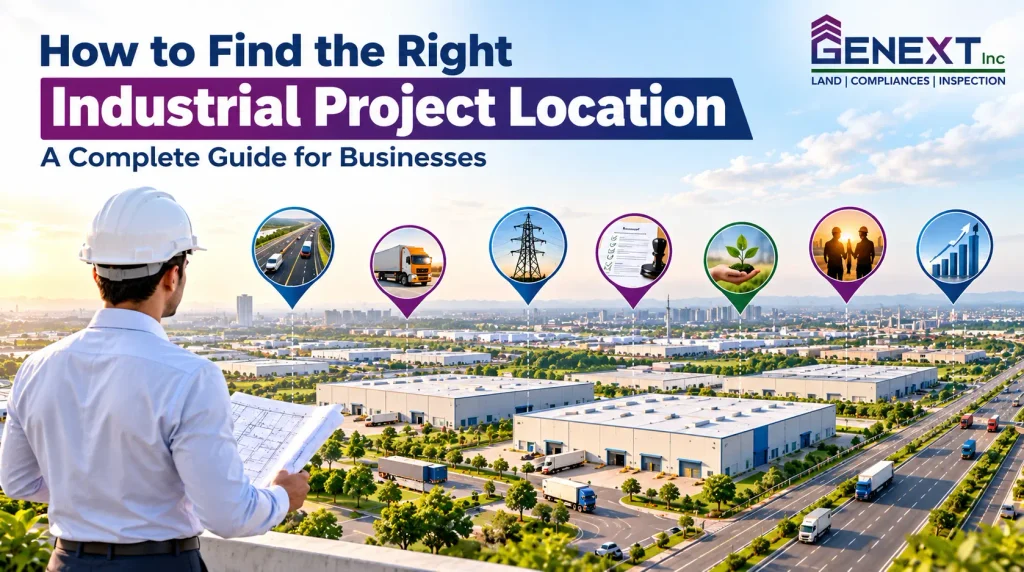
One of the most crucial choices for a large industrial project is its location. Choosing the right industrial project location can significantly influence logistics, operating costs, workforce access and long-term business growth. A proper site can enhance the logistics, lower the operation cost, create better access to labor and markets, and create long term growth in the business. Conversely, an inappropriate location can also pose connectivity, approval, utility, environmental compliance and project timelines issues.
Businesses need to consider a number of factors before they buy or lease industrial land.
The following are some important factors to consider when choosing where to place a large industrial project.
1. Check Connectivity for an Industrial Project Location
For big industrial projects, industrial project location plays an important role in determining how efficiently raw materials, finished goods, staff and equipment can be transported.
Assess the location of the site in relation to:
- National and state highways.
- Expressways
- Major roads
- Railway stations or freight terminals
- Airports, where relevant
- If the business relies on sea transport, ports will be included.Ports will be included if the business is dependent on sea transport.
Quality of road access is also crucial. Even if a site is near a highway, the highway roadway may be unsuitable for large trucks, or the site’s internal roads may be impassable.
2. Consider Proximity to Suppliers and Markets
The location should be consistent with the requirements of the project’s supply chain. For companies that rely on regular deliveries of raw materials, one aspect to take into account is the distance between the supplier and the proposed site.
Likewise, a viable proximity to key customer clusters can help to minimize transportation time and logistical expenses.
So, a manufacturing unit that serves customers in Delhi-NCR, for instance, can choose to be based in a location that has smooth road access to key markets located in the NCR area instead of opting for the cheapest land available.
3. Evaluate Availability of Utilities
Reliable infrastructure is a must for large industrial projects. Businesses need to do a feasibility study of the essential utilities available and feasible at the site, before making a decision.
- Electricity
- Water supply
- Drainage
- Sewerage
- Internet and telecommunications
- As necessary, fuel or gas infrastructure
The electricity demand should be evaluated based on the project to be implemented. It is also important for businesses to know if extra infrastructure or approvals will be needed for the connections to the utilities.
4. Check Land Use for an Industrial Project Location
Therefore, businesses should ensure that the industrial project location is suitable for the proposed activity and complies with applicable land-use and development requirements.
Businesses should verify the land’s:
- Ownership and title
- Land-use classification
- Zoning provisions
- Permitted development
- Applicable development controls
- Access and right-of-way
- Restrictions or encumbrances
As per the type and location of the project, various approvals/clearances may be needed from relevant authority.
Businesses can also refer to this complete guide to selecting the right industrial land for a manufacturing unit for additional guidance on evaluating industrial land before purchase.
5. Check Environmental and Regulatory Requirements
Large industrial projects must be given special attention in the context of their environmental impact. These requirements may differ with the nature, size, site and possible environmental effects of the activity in question.
Whether the project needs environmental clearance, clearance by State Pollution Control Board or other permissions relevant to the industry should be decided.
These should be determined at site evaluation and not once land has been bought.
6. Assess Workforce Availability
Large industrial unit requires a manpower of different categories like skilled, semi-skilled and labor.
Businesses need to take into account the availability of employees in the adjacent towns and cities, transportation facilities, availability of housing and access to essential services while comparing locations.
While land may be desirable, it might be difficult to recruit and retain employees if the location is not convenient.
7. Study Future Growth Potential
Industrial projects are generally designed for long term use. So, businesses need to go beyond the current situation and see into the future.
Inspect prepared infrastructure, upcoming roads, industrial facilities, logistic facilities, surrounding development and possible expansion.
Planned infrastructure, however, should not be considered as a foregone conclusion until there is official information to substantiate that. Businesses should differentiate between projects that are confirmed and proposed developments.
8. Compare Costs When Choosing an Industrial Project Location
The lowest priced land may not turn out to be the best value for money.
A true comparison would be based on:
The total cost of land, development, infrastructure, connectivity, approval-related costs and the running costs over the long term.
For instance the cost profile of a site of slightly higher value with existing infrastructure, connectivity and communications could well differ from a lower value site that requires much development work.
Conclusion
It’s not just about comparing land prices when it comes to finding the right industrial project location. Connectivity, supply chain, utilities, land use, approvals, environmental needs, labour availability, future project development and overall project costs should be considered as part of the package for businesses.
A good site selection and due diligence process can provide businesses with an opportunity to discover potential issues before investing large sums of money. The right location should be able to satisfy not just the current needs of the project, but also be able to ensure efficient and sustainable project operations for the long-term.
In the case of large industrial investments, conducting professional land and regulatory due diligence can help businesses make informed investment decisions with greater clarity and minimise unnecessary risks to the project.
For more insights on industrial real estate, approvals and regulatory compliance, follow Genext Inc. on LinkedIn.
