How to Select the Right Industrial Land for a Manufacturing Unit: Complete Buying Guide
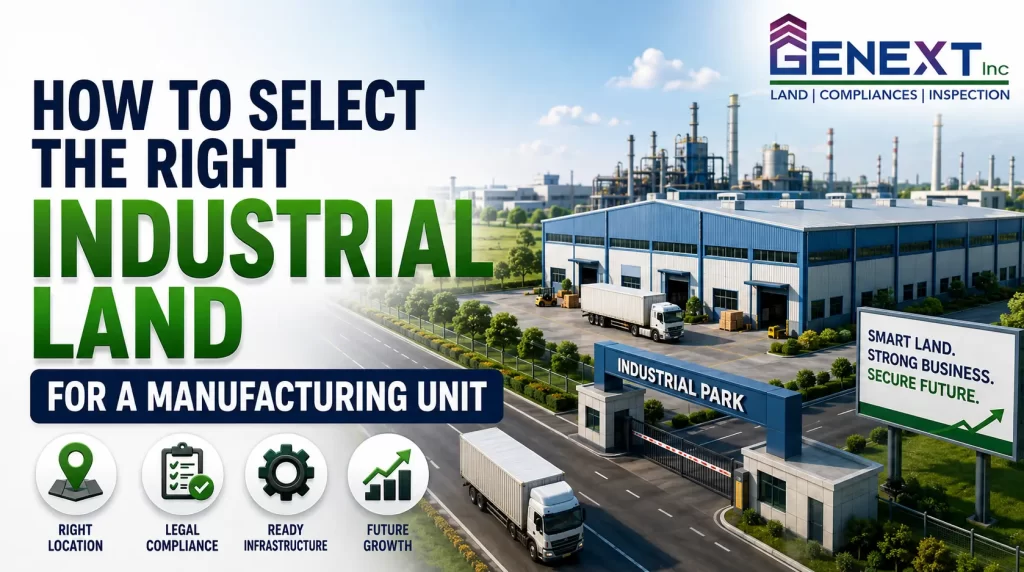
Industrial Land for Manufacturing Unit Guide: One of the most crucial decisions of any business is the selection of the industrial land for a manufacturing unit. The site chosen will have a direct bearing on the efficiency of production, on the logistics of the operations, on employee accessibility, on legal compliance and on future expansion. Bad location may raise operating costs and pose regulatory issues.
On the other hand, a well-structured industrial location supports long-term business growth and helps increase profitability.
The government’s vision of Make in India, the improved industrial infrastructure and the burgeoning domestic demand is driving India’s manufacturing sector to grow at a rapid pace. This has led to a robust demand for industrial plots by both investors and manufacturers in key industrial corridors and emerging business centres. But industrial real estate investments are risky if they’re not properly planned.
Businesses should consider some key elements before making an investment. They encompass location, zoning regulations, legal documentation, infrastructure, environmental approvals and potential future development. A systematic approach is used to minimize risk and to make sure that the land will accommodate the business and current operations.
Why Choosing the Right Industrial Land Matters
Moreover, industrial land is more than just a blank canvas. In fact, it becomes the foundation of your manufacturing business for decades. Therefore, choosing the right location is essential to every production process, to any warehouse, to any form of transportation, and to any expansion.
The location of a property which is situated in the industrial area will help minimise travel costs, maximise supply chain efficiencies and offer quicker access to suppliers and customers. It also serves as a good draw for skilled workers, given that people like to work if they can access facilities close to their homes and have easy access to the city.
Furthermore, buying land in an approved industrial zone eliminates legal hassles. As a result, permits can be obtained faster, and construction work can proceed without unnecessary delays.. This not only helps save time and cost throughout the project’s lifespan, but also helps build trust with the clients.
One of the other advantages to this is the long-term appreciation of assets. Land values tend to grow in stable, well-developed industrial areas with good infrastructure and transportation links and government backing. Hence, selecting the appropriate industrial land not only helps in the production processes but is also a long-term investment.
With increasing demand for industrial expansion, large land parcels in key industrial corridors are becoming limited. Businesses should understand the importance of early land identification and strategic acquisition to secure future-ready industrial locations.
In sum: planning now will save money later on.
When buying industrial land, there are some key considerations to make.There are some important factors to consider when purchasing industrial land.
When choosing industrial land it is important to do a detailed evaluation. Companies should look at more than just the price before they buy something, as there are many other operational and legal aspects to take into account.
Location and Connectivity
Of all the considerations that are important in choosing industrial land for a manufacturing unit, location is one of the most significant. A manufacturing plant relies on the easy flow of raw materials, finished goods, personnel and service people. Thus connectivity is directly related to operational efficiency.
In the absence of other options, opt for land close to national highways, expressways, railway freight corridors, ports, airports or logistics hubs. Convenient transportation lowers delivery and fuel expenses, and supply chain disruptions.
Also take into account the distance to your suppliers and target customers. Central location can enhance delivery efficiency and lower transportation costs.
Social facilities like hospitals, banks, restaurants and residential areas nearby the business should also be taken into consideration. This type of facility can draw in qualified personnel and enhance retention of workers.
Lastly, research the future plans for the area’s infrastructure. Not only might future highways, metro links, industrial corridors or logistics parks provide additional opportunities for business and property value, they may also provide additional value over time.
Industrial Zoning Compliance
Only certain land uses are legally allowed to include manufacturing. Prior to buying any industrial property, make sure that it is located in an approved industrial area.
Regulations on industrial zoning set restrictions on land use. Failure to purchase agricultural or residential land in the appropriate way can lead to legal issues, project delays or penalties.
Be sure to refer to local development authority regulations, master plans and land-use permissions at all times. Ensure that the proposed manufacturing operation can be carried out in the specified zone.
They should be aware of the limitations on pollution type, hazardous industries, building height, floor area ratio (FAR), and environmental standards as well.
A good zoning verification safeguards your investment and facilitates fast project approvals.
Infrastructure Availability
The best location can be a bad location if there are missing basic infrastructure.
When determining whether or not to close industrial land:
- Wide internal roads
- Reliable electricity supply
- Water availability
- Sewage and drainage systems.
- Stormwater management
- High-speed internet connectivity
- Waste disposal facilities in industries
- Fire safety infrastructure
A good infrastructure lowers the costs of future development, and manufacturing operations can be launched in a timely fashion.
It’s equally crucial to review the surrounding area of industrial surroundings. Other warehouses, logistics providers, suppliers and service providers in the region are also important to operational efficiency.
Utility Connections
A dependable utility linkage is important to the efficient running of any manufacturing facility. Prior to buying industrial land for a manufacturing unit, ensure uninterrupted electricity, water, gas and telecommunications are available.
Production disruptions and higher operating expenses from power outages. Likewise, insufficient water supply may impact production operations, particularly in the food industry, textile, chemical and pharmaceutical sectors.
Ensure access to:
- Three Phases Industrial Electricity Connection is available.
- Continuous water supply
- Availability of natural gas or fuel (if needed)
- Fiber optic broadband and telecommunication solutions.
- Back-up power facilities in close proximity
Assuming that utilities are not already in place, estimate the cost and time to get new connections before committing to the investment.
Environmental Clearances & Regulatory Approvals
The environmental approvals for many manufacturing industries are needed prior to construction or operations. As such, it’s essential to grasp the rules and regulations that will be in place when you’re choosing an industrial plot.
Depending on the industry, you might need approvals on:
- Environmental Clearance (EC)
- Pollution Control Board Consent.
- Groundwater permissions
- Fire safety approvals
- Factory License
- Building Plan Approval
It is possible that your project may be delayed if the land isn’t purchased after these requirements are not addressed.
Also it is recommended to check local industries. Slightly stricter compliance rules may apply if neighbouring businesses are heavy polluting.
Verify Land Ownership and Legal Documents
One process, before investing in industrial land for purchase, is the legal due diligence.
Always check the vendor’s clear title and authority to convey. Carefully examine all relevant documents before signing any agreement.
Important documents include:
- Sale Deed
- Title Deed
- Mutation Records
- Jamabandi / Revenue Records
- Encumbrance Certificate
- Land Conversion Documents (if applicable)
- Approved Site Plan
- Property Tax Records
It’s also advisable to secure the services of a legal advisor or a consultant in industrial real estate to ensure the authenticity of these documents.
A secure legal property is secured and prevents future problem in the future.
Think about possible future expansions.
Growth is always a consideration in planning your business.
The size of the land now could be sufficient for current needs, but your manufacturing unit might grow in the near future. The extra costs of relocating in the future can be significantly lower, if they are avoided altogether, by buying land that has potential for further development.
Identify places where:
- There is adjacent land available
- Planning for infrastructure development is underway.
- Demand for industry is rising.
- It is expected that the government will invest in this.
- Logistics facilities are growing in size
Future-ready planning allows for future extension of additional production lines, warehouses, administrative offices and employee facilities.
Evaluate Labour Availability
Skilled and semi-skilled labors are a significant factor in a manufacturing unit. Thus, there should be no underestimate of labour availability.
Select industrial sites where you can access:
- Skilled technicians
- Machine operators
- Engineers
- Administrative staff
- Contract labour
Local residential areas, public transport, healthcare and educational facilities also help to increase employee satisfaction and retention.
A place where the workforce is strong does not have high recruitment difficulties and ensures long-term operational stability.
The government policies and industrial incentives are discussed.
A number of State Governments provide generous incentives for industries.
These may include:
- Capital subsidies
- Stamp duty exemptions
- Electricity duty benefits
- Tax incentives
- Infrastructure support
- Skill development assistance
Prior to choosing industrial land for a manufacturing plant, do research on industrial policy in the preferred state.
These incentives can make a huge difference in terms of project profit and initial investment.
The cost of the item vs long-term value.
The most common mistake made by many investors is to concentrate only on the price of the buy. But not all the cheapest industrial plot is a good buy.
Rather, consider the overall cost of ownership, which encompasses:
- Land cost
- Development expenses
- Infrastructure costs
- Utility connection charges
- Legal expenses
- Transportation costs
- Future maintenance
It may pay off in the long term to invest a little more in a well connected industrial area.
Always measure operating efficiency and not the price of the machine.
Industrial Land Selection Checklist
Prior to buying industrial land, make sure you have done the following list:
✔ Verify industrial zoning.
✔ Confirm legal ownership.
✔ Examine land title documents.
✔ Check road connectivity.
✔ Evaluate the electricity and water supply.
✔ Review environmental compliance requirements.
✔ Review prospective growth prospects.
✔ Analyze logistics and transportation.
✔ Study labour availability.
✔ Understand government incentives.
✔ Estimate development costs.
✔ Do thorough due diligence.
When using this checklist, it helps to minimize investment risk and make the project more easily executed.
Common Mistakes to Avoid
There are some common pitfalls that many businesses can avoid when it comes to industrial land acquisition.
Some of the most common errors include:
- Purchase of land without legal clearances.
- Ignoring zoning regulations.
- Underestimating infrastructure costs.
- Selecting a site for its low cost.
- Overlooking future expansion.
- Not checking for environmental clearance of plans.
- Failure to consider access to transportation and logistics.
- Not consulting experienced industrial property professionals.
These are the pitfalls to avoid to save not just your time, but your finances as well.
How Genext Inc. Can Help
Proper development of the right industrial land depends on technical knowledge, legal skills and knowledge of the market. We assist clients in the identification, evaluation and acquisition of industrial properties that meet their business objectives at Genext Inc.
Our services include:
- Industrial Land Acquisition
- Land Due Diligence
- Site Evaluation
- Regulatory Compliance Support
- Government Approval Assistance
- Industrial Project Consultancy
Having an experienced team on your side gives you the peace of mind that you’re not taking unnecessary risks and that each investment decision is made after careful consideration and adherence to regulations.
Stay connected with Genext Inc. for the latest updates, industrial real estate insights, market trends and project opportunities on our official Facebook page.
A set of answers to frequently asked questions.
- When choosing industrial land, what is the most crucial aspect?
The most critical are: Location, Zoning, Legal verification, Infrastructure and future expansion potential.
2. What can be done with farmland for production?
Agricultural land typically does not permit legal land-use conversion and approval for use as industrial land.
3. Why is due diligence important before purchasing industrial land?
Due diligence helps identify legal disputes, ownership issues, zoning restrictions, environmental risks, and compliance requirements before investment.
4. What is the area needed for a manufacturing business?
The land requirement will vary based on your industry, production, warehouse requirements, parking, future expansion and government regulations.
5. Are industrial land consultants needed by businesses?
Yes. Businesses can rely on professional consultants to find appropriate properties, check legal paperwork, secure approvals, and mitigate risks in their investments.
Conclusion:
Choosing the right industrial land for your manufacturing unit is not something that can be taken lightly and will have a significant impact on your business for years to come. Assessing location, infrastructure, zoning regulations, legal documents, environmental compliance, labour availability and future growth and expansion possibilities can help businesses make an informed investment decision, and reduce unnecessary risks.
Consider both land value and business efficiency and compliance over the long term. A successful industrial site is designed well to boost productivity, accommodate future growth and increase profitability.
For those starting or growing a manufacturing business, it can be easy to get the process started and get it right with the help of experienced industrial real estate professionals.
Call to Action
Seeking the perfect industrial space for your factory?
Genext Inc. is specialized in the acquisition of industrial land, Diligence, Regulatory Compliance and end-to-end project consultancy. Call a expert now and discover the perfect commercial real estate property for your business needs and a sustainable future.
