CTE and CTO Pollution Control Board: Which Board Is Important for Your Project?
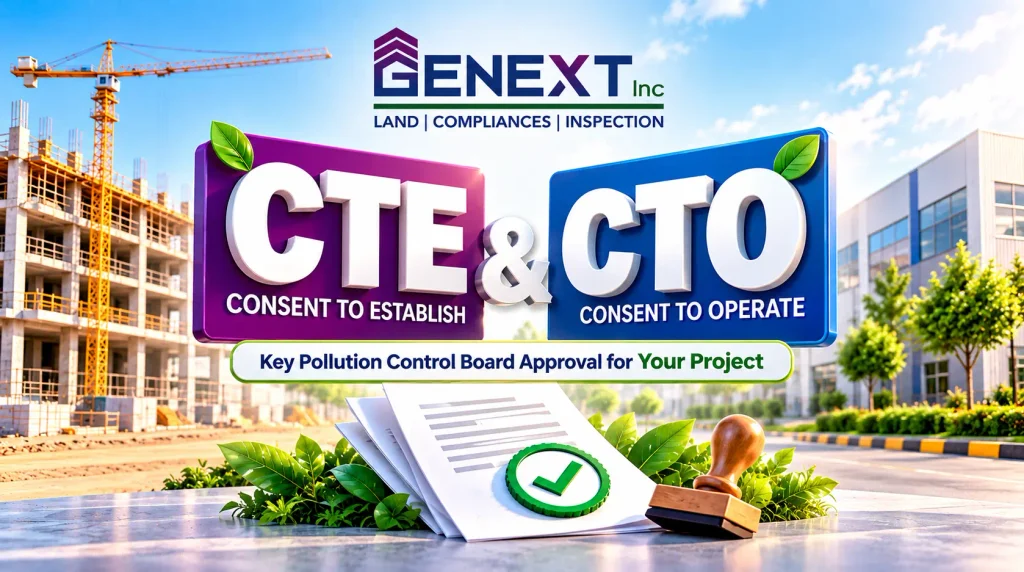
Interested in establishing a factory, manufacturing facility, commercial operation, hospital, hotel, warehouse or other operation that could result in air or water pollution? A common question in regulatory matters is: What is the Pollution Control Board’s approval for my project? Environmental compliance like CTE and CTO Pollution Control Board approvals are crucial for numerous projects and industrial processes in India. The term CTE stands for Consent to Establish; CTO stands for Consent to Operate. Generally, both approvals are granted by the relevant State Pollution Control Board (SPCB) in advance of setting up a project and the start of its activities.
What Is CTE – Consent to Establish?
Approval to Establish (CTE) is the groundwork necessary for the establishment of a project or industrial unit subject to the appropriate pollution-control consent conditions.
In simple terms, CTE is a way of answering this question:
Is it possible to create this project at this proposed location while complying with the pollution control conditions specified?
Details pertaining to the project location, site plan, manufacturing or operational process, amount of water used, amount of wastewater generated, air emission sources, proposed pollution-control equipment, investment details, and other supporting documents may be needed for the application.
The Pollution Control Board assesses the proposed activity and the measures required to control the pollution before consenting to the activity. Hence, the acquisition of CTE may be thought of as a pre-planning and pre-establishment process rather than a process that occurs after the project is established.
If any manufacturing company wants to set up a new production unit in Haryana, it would need to approach Haryana State Pollution Control Board (HSPCB) to obtain the consent applicable for the establishment of the unit.
What Is CTO – Consent to Operate?
Once a project is in place and the necessary pollution-control systems are in place, the next key approval is Consent to Operate (CTO).
In cases of consent, it is common practice to obtain CTO prior to production or regular operations. The intent is to ensure that the unit has installed pollution-control equipment and is able to function under the conditions set forth by the Board.
CTE and CTO are not synonymous.
The trick to remembering the difference is:
CTE = Grant of permission for establishment.
CTO = Consent to operate.
The State Pollution Control Boards define CTE as a pre-establishment consent and CTO as consent to be obtained before production or operation begins.
When Should You Apply for CTE and CTO?
The order makes a difference!
1. Before Establishing the Project
Before deciding whether to apply for consent, decide which category and authority is relevant to your project. Secure CTE if applicable, before setting up the unit.
2. Set up the Unit as outlined in Approved Conditions
The project shall be designed based on the conditions outlined in the CTE and other relevant approvals.
3. Install Pollution-Control Systems
Where appropriate for the project, required air-pollution, water-pollution and waste-management systems should be installed.
4. Apply for CTO
If the unit is ready to operate, make application for CTO prior to production or applicable operations.
5. Keep with Compliance, Renew
Generally CTO is obtained for a specific term, and can be renewed. The project will be subject to the conditions attached to the consent and must continue to meet these conditions.
CTE and CTO do not necessarily apply to a project. Installing the structures may also require consideration of land-use permissions and other statutory approvals, depending on the location and the proposed land use. It is essential to know the definition of the CLU to be applied to projects in Haryana during the early stages of a project. For the latest information on land use requirements and approval, read our detailed guide on Haryana CLU Rules 2026.
Why CTE and CTO Matter for Project Owners
Failure to meet the requirements of consent with respect to measures to control pollution may involve regulatory and business risks. If any required approvals are not secured or conditions are not complied with, a project can be delayed, or compliance issues, notices, penalties or restrictions on operation may arise.
Requirements may also be dependent on the type and polluting effects of the activity. Consent requirements are determined for each project based on the pollution control authorities’ categorisation systems.
As such, it is crucial to project owners to not wait until construction or production is nearing completion. It is important to know from the outset which Pollution Control Board and consent requirements apply to a project so as to minimise compliance delays and project planning.
Final Takeaway
When you ask yourself the question “Which Pollution Control Board is important for my project?” you’re typically looking for the State Pollution Control Board for the State in which your project is located.
The need for CTE is normally prior to establishing of the applicable project and the need for CTO is normally prior to the commencement of the applicable operations. CPCB is significant at the national level but the concerned SPCB is the primary body to obtain project specific consent.
Prior to construction, machinery or activity, review the project activity, location, pollution category and applicable approvals. Obtaining timely and appropriate consent at the appropriate time can prevent unwanted compliance issues and ensure your project is legally fit for purpose.
For updates on real estate compliance, industrial land, regulatory approvals, building inspection, and project-related requirements, follow Genext Inc. on LinkedIn.
