Compliance Gaps Found During Authority Site Inspections
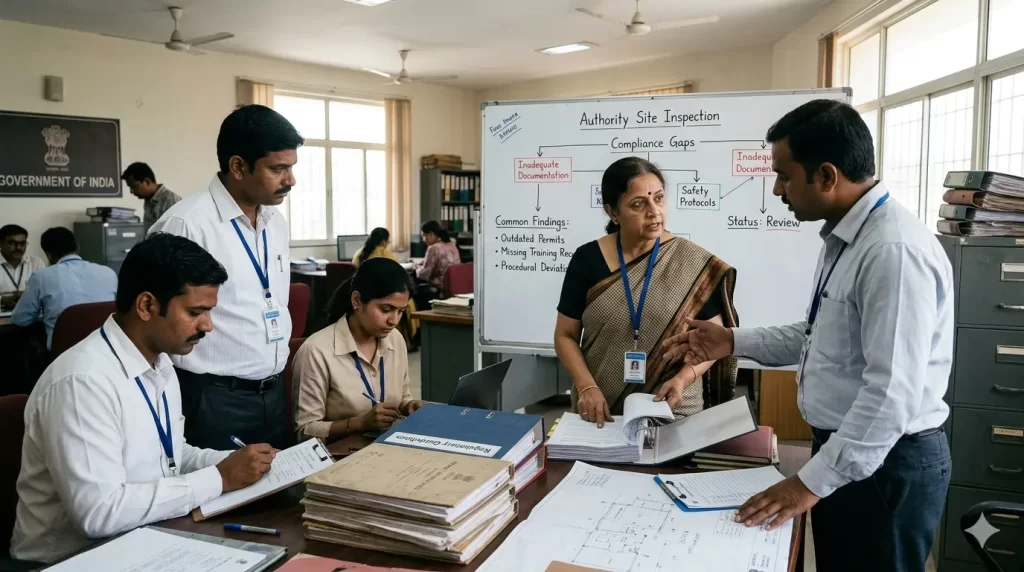
Industrial, commercial, and infrastructure projects in India are subject to periodic inspections by various authorities, including fire departments, pollution control boards, labour departments, and local development bodies. These inspections are critical checkpoints to ensure that projects comply with approved plans, safety standards, and regulatory frameworks.
However, one recurring challenge across projects is the presence of compliance gaps identified during authority site inspections. These gaps can lead to penalties, delays, stop-work notices, or even operational shutdowns if not addressed in time.
Understanding the most common compliance gaps and their implications can help developers, contractors, and occupiers proactively prepare and avoid disruptions.
Understanding the most common compliance gaps and their implications can help developers, contractors, and occupiers proactively prepare and avoid disruptions with the support of professional real estate compliance consultancy.
What Are Compliance Gaps?
Compliance gaps refer to deviations between approved plans, regulatory requirements, and actual site conditions. These may arise due to:
- Changes during construction not updated in approvals
- Lack of coordination between design and execution teams
- Incomplete implementation of safety or environmental measures
- Misinterpretation of regulatory requirements
Even minor deviations can escalate into major issues during inspections.
Common Compliance Gaps Found During Inspections
1. Deviations from Approved Building Plans
One of the most frequent observations is mismatch between:
- Approved drawings
- As-built construction
Common issues include:
- Unauthorized structural changes
- Increased built-up area
- Altered layouts affecting safety compliance
These deviations can result in rejection of occupancy certificates or penalties.
2. Fire Safety Non-Compliance
Fire departments often identify gaps such as:
- Incomplete fire fighting systems
- Non-functional hydrants or sprinklers
- Blocked fire exits or escape routes
- Inadequate fire tender access
Fire compliance is critical, and any lapse can lead to immediate action.
3. Environmental and Pollution Control Violations
Authorities may flag:
- Improper waste disposal systems
- Missing pollution control equipment
- Non-compliance with Consent to Establish / Operate conditions
- Dust and emission control failures
These issues are particularly common in industrial and construction sites.
4. Labour and Worker Safety Issues
Labour department inspections often reveal:
- Inadequate worker safety gear
- Poor labour camp conditions
- Missing registrations or records
- Non-compliance with welfare regulations
Such gaps can lead to fines and operational disruptions.
5. Electrical and Utility Non-Compliance
Electrical inspections may identify:
- Improper wiring or overloading
- Lack of earthing systems
- Unsafe temporary connections
- Non-compliance with sanctioned load conditions
Utility-related gaps also include water and sewage system deviations.
6. Incomplete Documentation on Site
A common issue during inspections is the absence of:
- Approved plans and licenses
- NOCs and compliance certificates
- Maintenance records
Even if systems are installed correctly, lack of documentation can result in non-compliance observations.
Why Do These Gaps Occur?
Several factors contribute to compliance gaps:
- Rushed project timelines
- Poor coordination between consultants and contractors
- Limited awareness of updated regulations
- Lack of periodic internal audits
- Focus on completion rather than compliance
In many cases, compliance is treated as a final-stage activity rather than a continuous process.
Impact of Compliance Gaps
Failure to address compliance gaps can result in:
- Project delays
- Financial penalties
- Rework and additional costs
- Denial of occupancy or operational approvals
- Legal complications
- Reputational risk
For large industrial and commercial projects, these risks can significantly affect overall project viability.
How to Minimize Compliance Risks
1. Conduct Regular Internal Inspections
Periodic audits during construction help identify issues early.
2. Align Execution with Approved Plans
Ensure that all site activities strictly follow approved drawings and specifications.
3. Maintain Complete Documentation
Keep all approvals, certificates, and records readily available on-site.
4. Coordinate Across Departments
Ensure alignment between design, compliance, and execution teams.
5. Plan Compliance as an Ongoing Process
Treat compliance as a continuous activity rather than a one-time requirement.
Conclusion
Authority site inspections are not just regulatory formalities—they are essential safeguards to ensure safety, compliance, and long-term sustainability of projects. The presence of compliance gaps often reflects deeper issues in planning and execution.
By proactively identifying and addressing these gaps, developers and occupiers can ensure smoother approvals, avoid costly disruptions, and maintain the integrity of their projects.
Get the latest updates, industry insights, and compliance-related information by following Genext Inc. on Facebook.
