A Complete Guide to Property Management in India for NRIs
For Non-Resident Indians (NRIs), owning property in India is both an emotional and financial investment. Whether it is a residential apartment, a rental property, or land held for long-term appreciation, managing it remotely can be challenging.
Distance, regulatory requirements, tenant management, and maintenance issues often make property ownership complex for NRIs. This is where structured property management becomes essential.
This guide explains the key aspects of property management in India for NRIs and how to handle them effectively.
Why Property Management Is Crucial for NRIs
Managing property from abroad involves multiple challenges:
- Limited physical access to the property
- Difficulty in monitoring maintenance and repairs
- Tenant management issues
- Risk of property misuse or encroachment
- Lack of awareness of local regulations
Without proper oversight, these challenges can lead to financial losses and legal complications.
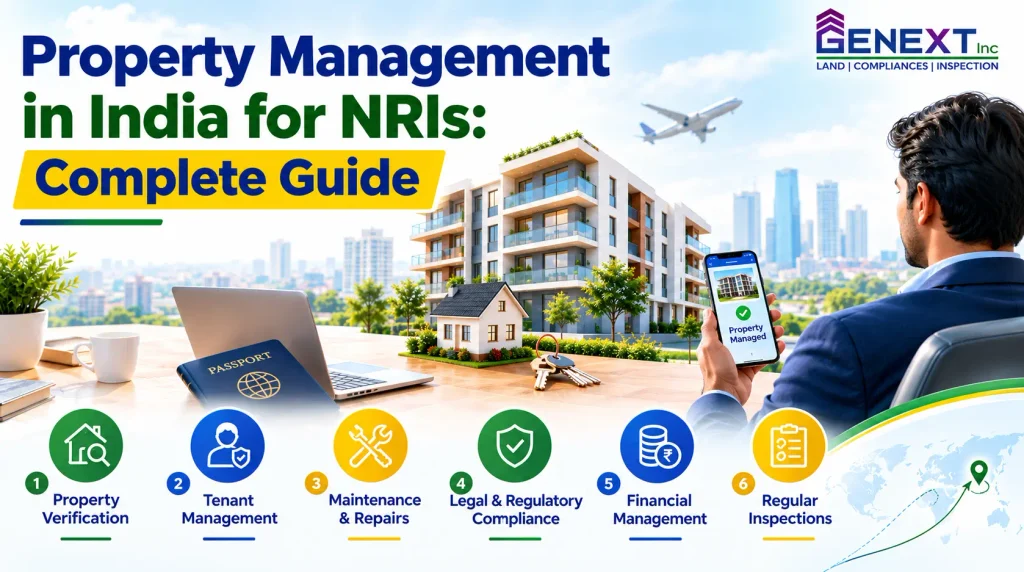
Key Components of Property Management
1. Property Verification and Documentation
Before managing or leasing a property, NRIs should ensure:
- Clear ownership title
- Updated property documents
- Verified land records and approvals
- No pending legal disputes or encumbrances
Proper documentation is the foundation of secure property ownership.
2. Regular Property Inspections
Periodic inspections help ensure:
- Property is well-maintained
- No structural or leakage issues
- No unauthorized occupation
- Systems such as electrical and plumbing are functioning properly
Regular checks are especially important for vacant properties.
3. Tenant Management
For rental properties, managing tenants includes:
- Tenant verification and background checks
- Lease agreement drafting
- Rent collection and tracking
- Handling tenant complaints
- Managing move-in and move-out processes
Poor tenant management can lead to disputes and financial risks.
4. Maintenance and Repairs
Ongoing maintenance ensures long-term value of the property.
This includes:
- Plumbing and electrical repairs
- Waterproofing and seepage checks
- Structural upkeep
- Cleaning and upkeep of common areas
Timely maintenance prevents small issues from becoming costly problems.
5. Legal and Regulatory Compliance
NRIs must comply with:
- Property tax payments
- Rental income tax regulations
- Local municipal rules
- Tenant-related laws
Non-compliance can result in penalties or legal complications.
6. Financial Management
Managing finances includes:
- Tracking rental income
- Managing maintenance expenses
- Ensuring timely tax payments
- Maintaining financial records
Transparent financial tracking is essential for long-term property planning.
Common Challenges Faced by NRIs
NRIs often encounter:
- Difficulty in finding reliable local support
- Delays in maintenance and repairs
- Tenant disputes
- Lack of real-time updates
- Risk of property misuse or illegal occupation
These challenges highlight the need for structured management.
Role of Professional Property Management Services
Professional property management services can assist with:
- End-to-end property monitoring
- Tenant sourcing and management
- Regular inspections and reporting
- Maintenance coordination
- Legal and compliance support
Such services help NRIs manage properties efficiently without being physically present.
Best Practices for NRIs
To ensure smooth property management, NRIs should:
- Maintain updated documentation
- Conduct periodic inspections
- Keep clear rental agreements
- Track financials regularly
- Stay informed about local regulations
- Engage trusted professionals where required
Conclusion
Owning property in India offers significant long-term value, but effective management is essential—especially for NRIs.
With the right systems, regular monitoring, and structured processes, NRIs can protect their investments, generate steady returns, and avoid unnecessary risks.
Property management is no longer just about maintenance—it is about ensuring security, compliance, and long-term value.
