Plumbing Inspection Checklist: What Plumbers Check
A plumbing inspection checklist is an integral component of any property. However, many plumbing problems are not noticed until they cause significant damage. Therefore, regular inspections are essential.
A professional plumbing inspection can help to reveal these potential issues before they turn into costly repairs. Using a detailed plumbing inspection checklist, experts check every essential component, such as pipes, fixtures, drainage systems, water pressure, leakage points and more.
A plumbing inspection offers a lot of information about what is actually happening in your plumbing system, whether you are looking to purchase a new residence, maintaining your current home or planning on renovating your home.
Why is a Professional Plumbing Inspection Important?
Homeowners only seek out plumbers when there is an issue that is obvious, such as leaking water, foul odor, weak water pressure, or a damaged pipe. There are, however, a number of plumbing problems that can occur in the interior of walls, ceiling and underground spaces which are not easily detected.
Potential risks are picked up at an early stage during a professional inspection. As a result, homeowners can avoid unnecessary repairs. In addition, they can reduce long-term maintenance costs.
A detailed plumbing inspection is also helpful for property owners to determine if the plumbing system is installed correctly, and if it is suitable for future use.
This inspection can be even more critical on newly purchased homes as many plumbing issues may not be apparent during the standard home inspection.
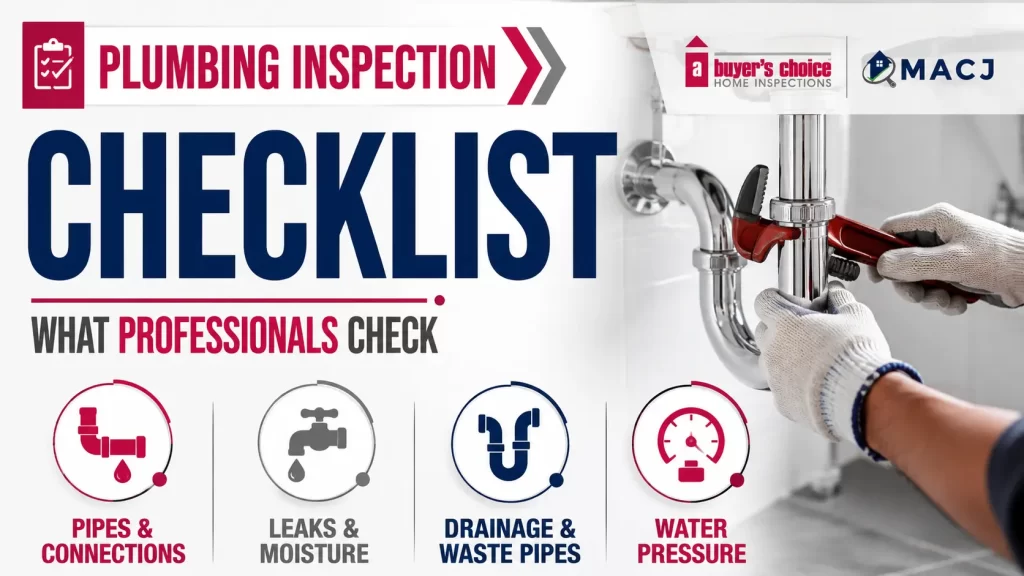
This Plumbing Inspection Checklist: What Professionals Check will provide you with some ideas.
1. Inspect Water Supply Pipes and Connections
The initial process in plumbing inspection is inspecting the state of the water supply pipes. Inspect visible pipes, joints, connections and fittings for potential problems.
Professionals thoroughly check pipes for corrosion, cracks, loose connections and moisture.
The quality of pipes is also assessed in older properties as damaged or outdated pipes can impact water flow and overall plumbing operations.
Experts also inspect if the pipe installation complies with the required safety and construction requirements.
2. Identifying water from under the radar.
One of the most frequent plumbing issues during a plumbing inspection is hidden leaks. For example, leaks behind walls may remain unnoticed for months. Consequently, they can lead to structural damage and mould growth.
Advanced tools could be utilized for a professional plumbing inspection, to pinpoint the moisture level and probable leakage zones.
The inspection process involves inspecting:
- Damp spots on walls
- Good signs of moisture are near plumbing lines
- What do stains on ceilings mean?So, what do ceiling stains indicate?
- Near bathroom and kitchen areas, unusual wet areas could be the cause of a problem.
- The leakage at pipe joins.
Preventing structural damage, mould growth and costly waterproofing repair work by early detection.
3. Making repairs to Bathroom Plumbing Systems
Multiple components of the plumbing system are found in bathrooms and should be inspected regularly. Water connections, drains, faucets and toilets are carefully inspected.
The following points are checked:
- Toilet flushing performance
- Rings, wobbling around toilet base
- Tap and shower feature
- Drainage speed
- Water pressure
- Check the condition of the seal around fixtures.
Bathroom plumbing issues can result in water loss and damp issues. Hence, a thorough inspection is suggested prior to purchase of a home or the renovation process.
4. Checking Drainage and Waste Pipes
Drainage troubles may start gradually. Moreover, they can become serious if ignored. Therefore, professionals inspect drainage systems carefully during every inspection.
The following are some of the common issues identified:
- Slow drainage
- Blocked pipes
- Bad odour
- Pipe damage
- Slope of drainage lines is wrong.
An adequate drainage inspection will move the wastewater around efficiently and minimize the potential for future clogs.
Also, drainage problems may sometimes be a sign of bigger plumbing installation problems that need to be addressed as quickly as possible.
5. Testing Water Pressure
Water pressure is a critical factor in any plumbing system. Similarly, inconsistent pressure may indicate hidden leaks or blocked pipes. Hence, professionals test every outlet carefully.
Water pressure is tested at various outlets during the inspection, such as:
- Kitchen taps
- Bathroom fixtures
- Shower systems
- External water points
If the pressure is not consistent, more investigations are carried out to find the root cause.
Proper water pressure will make life more convenient every day, and will extend the useful life of plumbing components.
6. Checking Water Heaters and Hot Water Systems
Proper inspection is needed for water heaters due to their plumber and safety concerns.
Professionals check:
- Water heater connections
- Any leaking around the unit.
- Pipe conditions
- Temperature settings
- Safety valves
Water leakage and operational problems can occur due to improper installation or damaged connections.
Frequent inspection assures efficient and safe operation of hot water systems.
7. Checking Kitchen Plumbing
Kitchen plumbing systems are used regularly. Therefore, they require frequent inspections. In addition, hidden leaks beneath cabinets should be checked carefully.
Key inspection areas are:
- Sink leakage
- Faucet condition
- Under sink pipe connections
- Drain blockage
- Water flow problems
Under kitchen cabinets there may also be hidden leakage that can affect wood structures and lead to moisture issues.
8. Checking plumbing fixtures and fittings
Checks are made to ensure that fixtures like taps, showerheads, toilets and valves operate correctly.
Professionals evaluate:
- Physical damage
- Leakage signs
- Loose fittings
- Water flow efficiency
- Installation quality
Faulty fixtures may lead to high water usage and should be replaced.
The full plumbing inspection checklist makes sure that all the fixtures are thoroughly reviewed.
9.. Pumping Septic Tanks
Other plumbing systems outside the building are also inspected professionally. Sewer lines, outside pipes and drainage outlets are inspected for potential problems.
External drains issues can cause problems throughout the property and can cause water to build up, unpleasant odours.
A professional assesses the external drainage system for proper operation and to determine if repairs are needed.
10. Detailed Plumbing Inspection Report – Prepare
Once the inspection is finished, a detailed report is generated that indicates the condition of the plumbing system.
The report will typically contain:
- Identified issues
- Leakage locations
- Damage assessment
- Required repairs
- Maintenance recommendations
This report enables property owners to make informed property decisions.
For sellers, it offers transparency prior to selling. It also assists current homeowners in planning their future preventative maintenance.
The advantages of adhering to a plumbing inspection checklist are numerous.
Advantages of following a plumbing inspection checklist are plentiful.
Having the right plumbing inspection checklist offers several benefits. For instance, it helps prevent expensive repairs. Furthermore, it improves water efficiency and protects the property’s structure.
Prevents Expensive Repairs
If you can identify the problem early, then you are not likely to have to pay a lot of money to fix the issue later.
Improves Water Efficiency
It helps decrease unnecessary water loss when you can identify leaking fixtures and damaged pipes.
Protects Property Structure
Subtle leaks can deteriorate walls, ceilings and floors. When the building structure is inspected regularly, it helps to protect it.
Increases Property Value
Maintaining proper plumbing helps to keep the property in a better shape and makes it more valuable.
Structural defects and plumbing issues often go hand in hand during property inspections. You can also read our detailed guide on Common Structural Snag Issues Detected Before Year-End Handovers to understand how hidden construction defects impact long-term property performance.
When is the Right Time to have a Plumbing Check?
The following are times when a plumbing inspection is recommended:
- Prior to buying a new home
- Before moving into a new construction home.
- Before renovation work
- Following significant water loss problems.
- In a routine maintenance of the property
It is important to conduct regular inspections to catch issues early.
Professional Plumbing Inspections are conducted on a regular basis.Regular Plumbing Checking is done by the professionals.
Simple inspections can be done by the homeowner, while professional inspections offer greater analysis.
The professional inspector has experience and specialist equipment to detect problems that may not be seen during the regular inspection.
For instance, if there is a small water leak spot, this can be a sign of an underlying plumbing leak. A professional examination will not only uncover visible symptoms, but also the true cause.
Final Thoughts: Importance of a Plumbing Inspection Checklist
A plumbing system is always in use, hidden behind walls, floors and ceilings. Many problems are concealed, thus regular inspection is essential for property safety and maintenance.
A plumbing inspection checklist outlines all the key points of a professional inspection, which includes checking pipes, drainage systems, fixtures, and leakages.
A professional plumbing inspection can save you money, no matter what your plans are from buying your home, maintaining it, or considering any renovations.
It’s never too late to have a leaky toilet checked out today that could cause serious plumbing issues tomorrow.
Stay connected with Genext Inc. for expert property inspection tips, industrial real estate insights and project updates. Follow us on Facebook for the latest updates.
For further information, please refer to our Frequently Asked Questions (FAQs).
1. A plumbing inspection checklist will include the following:
2. What is the length of time of a professional plumbing inspection?
3. Is it possible to detect the hidden water leaks during plumbing inspection?
4. Do you need to have plumbing inspected before you purchase a house?
5. What is the regularity for plumbing inspection?
