Inter-State Differences in Industrial Approval Processes Developers Must Know
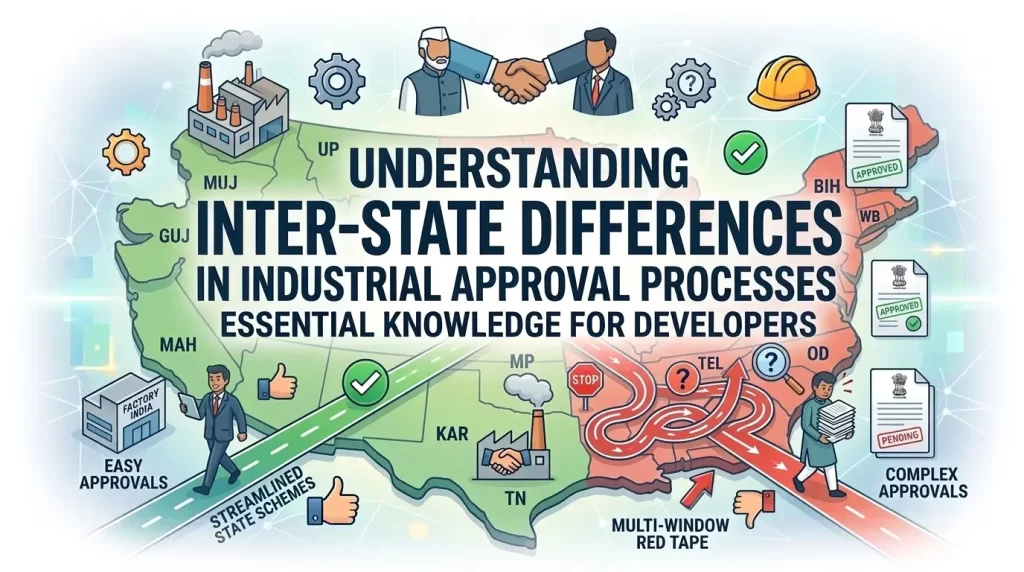
India’s industrial growth is accelerating as manufacturing, logistics, and data infrastructure continue to expand across multiple states. Government initiatives such as Make in India, industrial corridor development, and logistics policy reforms are encouraging companies to establish large-scale facilities across the country.
However, one of the most important factors developers and investors must understand before initiating a project is that industrial approval processes vary significantly from state to state. While broad regulatory frameworks are similar across India, the practical procedures, timelines, and documentation requirements often differ depending on the state where the project is located.
These variations can affect project timelines, compliance costs, and even site feasibility. For developers planning industrial parks, factories, warehouses, or logistics hubs, understanding these inter-state differences is critical for effective project planning.
Why Industrial Approvals Differ Across States
India follows a federal governance structure where both the central government and state governments regulate industrial development. While central laws provide broad guidelines, individual states establish their own policies and procedures for land use, environmental approvals, labor compliance, and industrial licensing.
As a result, developers may experience differences in areas such as:
- Land use conversion policies
- Building plan approval procedures
- Environmental clearance requirements
- Pollution control approvals
- Fire safety compliance
- Utility connection processes
- Labour and worker welfare regulations
Even states that promote industrial development aggressively may have different approval hierarchies or documentation requirements.
Understanding these differences early helps developers avoid administrative delays and regulatory complications.
Variations in Land Use Conversion (CLU) Policies
One of the earliest approvals required for industrial projects is Change of Land Use (CLU) when agricultural land needs to be converted into industrial use.
While the concept is similar across India, the process differs significantly between states.
For example:
- Some states require multiple departmental approvals before CLU is granted, including town planning, revenue, and environmental departments.
- Others provide integrated CLU processing through industrial development authorities.
- Processing timelines can vary from a few weeks to several months depending on documentation and project size.
Certain states also require additional infrastructure commitments, such as road connectivity or drainage planning, before approving industrial land conversion.
These differences can influence how quickly developers can move from land acquisition to construction.
Environmental and Pollution Control Approvals
Industrial projects must obtain environmental and pollution-related approvals from State Pollution Control Boards (SPCBs).
Developers planning industrial warehouses must also evaluate sector-specific compliance requirements, especially for FMCG, pharma, and e-commerce facilities. A detailed warehousing compliance checklist helps ensure regulatory readiness before project execution.
While the central framework defines the categories of industries and pollution norms, the operational procedures differ across states.
Common variations include:
- Documentation requirements for Consent to Establish (CTE)
- Environmental impact study expectations
- Site inspection protocols
- Approval timelines for pollution control clearances
Some states have implemented digital application systems that streamline approvals, while others still rely on partial manual verification processes.
This means the same industrial project could face different approval durations depending on the state in which it is located.
Building Plan Approval Processes
Industrial building plan approvals also vary significantly across states.
In certain regions, building plan approval is handled by local development authorities or municipal bodies, while in industrial zones it may be issued by state industrial development corporations.
Key variations include:
- Structural design verification requirements
- Fire safety review stages
- Height restrictions and zoning guidelines
- Infrastructure compliance checks
States that have adopted digital building approval systems may process applications faster, while traditional systems may involve multiple physical submissions.
Understanding the correct approval authority for each region helps prevent unnecessary application rejections.
Labour and Worker Welfare Compliance
Labour regulations are largely governed by central legislation, but implementation is managed by state labour departments.
This creates differences in:
- Labour camp approval procedures
- Worker safety compliance documentation
- Registration under labour welfare boards
- Site inspection requirements
Industrial developers must ensure that worker accommodation, safety provisions, and labour registrations meet the standards set by the specific state in which the project operates.
Utility and Infrastructure Approvals
Industrial facilities require approvals and connections for key utilities such as electricity, water supply, sewage systems, and road access.
The approval procedures for these services vary between states and sometimes between districts.
For instance:
- Electricity load sanctioning processes may involve different documentation standards.
- Water extraction permissions may require additional groundwater authority approvals in some regions.
- Road access approvals may involve state public works departments in certain locations.
These variations can impact the overall project timeline if not planned carefully.
Role of State Industrial Promotion Policies
Many states offer industrial promotion policies designed to attract manufacturing and logistics investments.
These policies may include:
- Capital subsidies
- Stamp duty exemptions
- Fast-track approvals
- Land allotment schemes in industrial parks
However, the eligibility criteria and documentation requirements differ across states.
Developers planning multi-state industrial expansion must analyze these policies carefully to determine the most viable project location.
Importance of Local Regulatory Expertise
Given the variations in approval systems, developers often benefit from conducting detailed regulatory due diligence before acquiring land or initiating project design.
Key steps typically include:
- Evaluating local zoning regulations
- Reviewing state industrial policy frameworks
- Identifying department-wise approval requirements
- Estimating approval timelines and compliance costs
Early-stage feasibility assessments help ensure that projects align with local regulatory frameworks and avoid delays later in the development cycle.
Conclusion
India offers strong opportunities for industrial expansion, supported by infrastructure investments, logistics modernization, and policy reforms. However, the regulatory environment remains diverse, with approval processes varying significantly between states.
For developers, investors, and industrial planners, understanding these inter-state differences is essential for successful project execution. Careful planning, regulatory awareness, and structured approval strategies can help navigate these complexities and keep industrial projects on schedule.
As India continues to expand its manufacturing and logistics footprint, the ability to manage regulatory variations across states will remain a critical factor in industrial project success.
Follow Genext Inc. for updates on industrial real estate, land acquisition, compliance solutions, and infrastructure development insights.
