Understanding CLU (Change of Land Use) for Industrial Projects
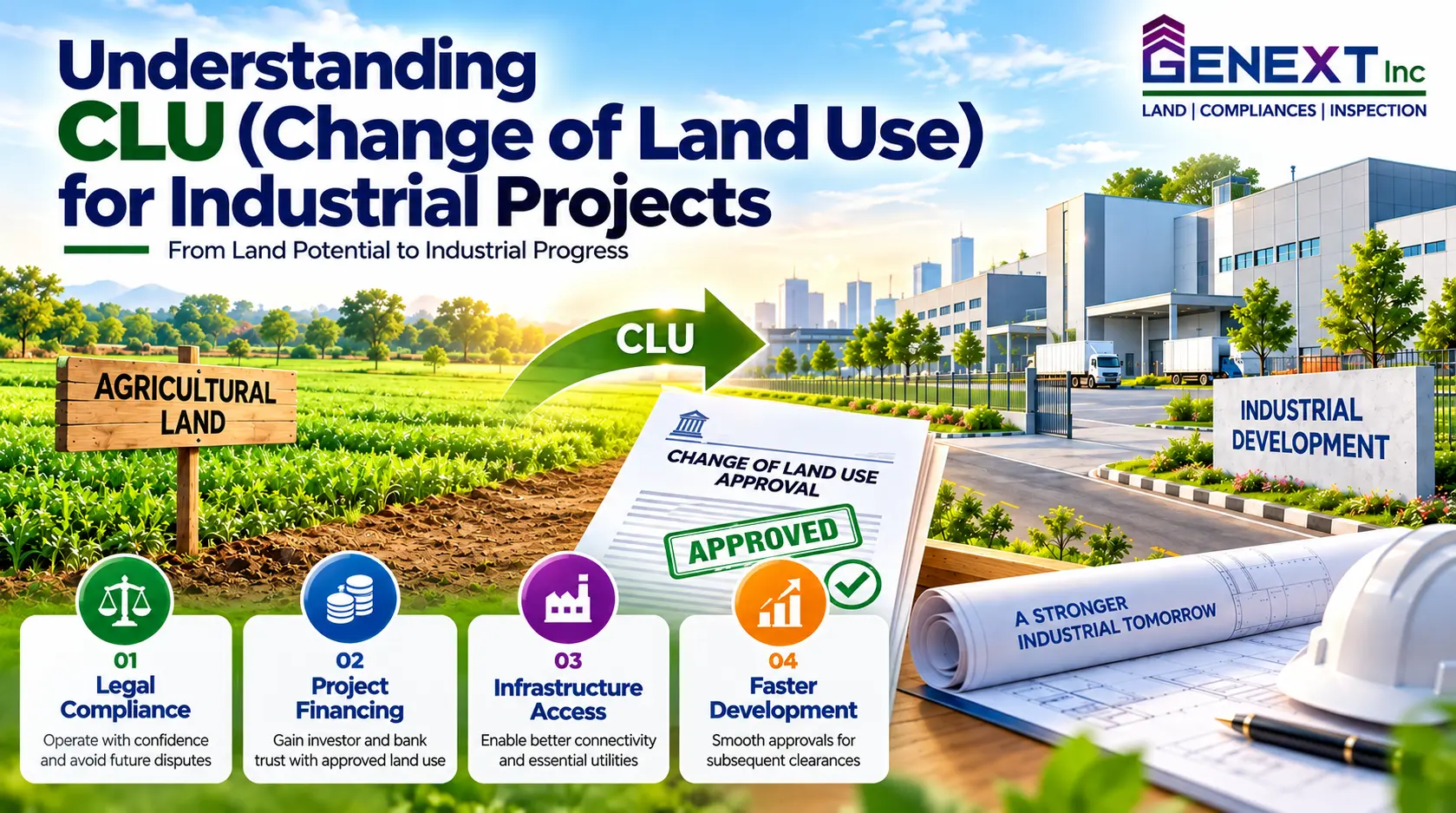
Land is the foundation of every real estate or industrial development — but not all land can be used for every purpose. Before an industrial unit, warehouse, or manufacturing plant is set up, one essential step ensures that the land is legally ready for development: CLU, or Change of Land Use.
What Is CLU?
CLU (Change of Land Use) is a government approval process that allows land to be converted from one designated use to another — for instance, from agricultural to industrial or commercial.
In most Indian states, this process is regulated by the Town and Country Planning Department or equivalent state authorities. Without CLU approval, developing industrial or commercial structures on agricultural land is illegal and can result in penalties or demolition orders.
Why CLU Matters for Industrial Projects
1️⃣ Legal Compliance
Industrial land use must align with the master plan or zoning map of the area. CLU approval confirms your project complies with these regulations, safeguarding it from future disputes.
Industrial land use must align with the master plan or zoning map of the area. Understanding how planned development and land-use regulations evolve is also important for developers. For example, Delhi Master Plan 2047 outlines major planning directions related to high-rise development, Transit-Oriented Development (TOD), and housing. CLU approval confirms that your project complies with applicable land-use regulations.
2️⃣ Project Financing
Banks and investors often require CLU documentation before funding projects. It proves the land’s legality and appropriate zoning for the proposed use.
3️⃣ Infrastructure Access
CLU-approved land typically receives access to essential infrastructure — such as roads, power, and water supply — through planned layouts, helping projects function efficiently.
4️⃣ Faster Approvals for Future Development
Once CLU is approved, subsequent permissions like building plan sanction, fire NOC, and pollution clearance move faster since the land classification is already compliant.
CLU Application Process
While the process varies across states, it typically involves:
- Application Submission to the District Town Planner (DTP) or Urban Local Body.
- Site Inspection to assess road connectivity, land character, and surrounding development.
- Reports from Departments like PWD, Environment, and Pollution Control.
- Payment of Conversion Charges based on land area and category.
- Final Approval Order, granting legal permission for land use change.
Common CLU Challenges Developers Face
- Delays due to incomplete documentation or overlapping ownership.
- Projects located in restricted zones or near ecological areas.
- Misalignment between local and state-level planning authorities.
Working with an experienced regulatory compliance consultant can simplify this process, ensuring that applications are filed correctly, follow-up happens timely, and objections are addressed efficiently.
Conclusion
CLU isn’t just paperwork — it’s the legal foundation that determines whether an industrial project can take shape.
For developers, investors, and corporates, understanding and obtaining CLU early in the planning stage can prevent costly delays and unlock smoother project execution.
In India’s fast-growing industrial ecosystem, timely CLU approvals are the first step toward creating compliant, sustainable, and investment-ready projects
Stay updated with real estate approvals, regulatory developments, and industry insights by following Genext Inc. on LinkedIn.
