Building Inspections: The Hidden Pillar of Safety in Commercial and Industrial Spaces
Building Inspections: The Hidden Pillar of Safety in Commercial and Industrial Spaces
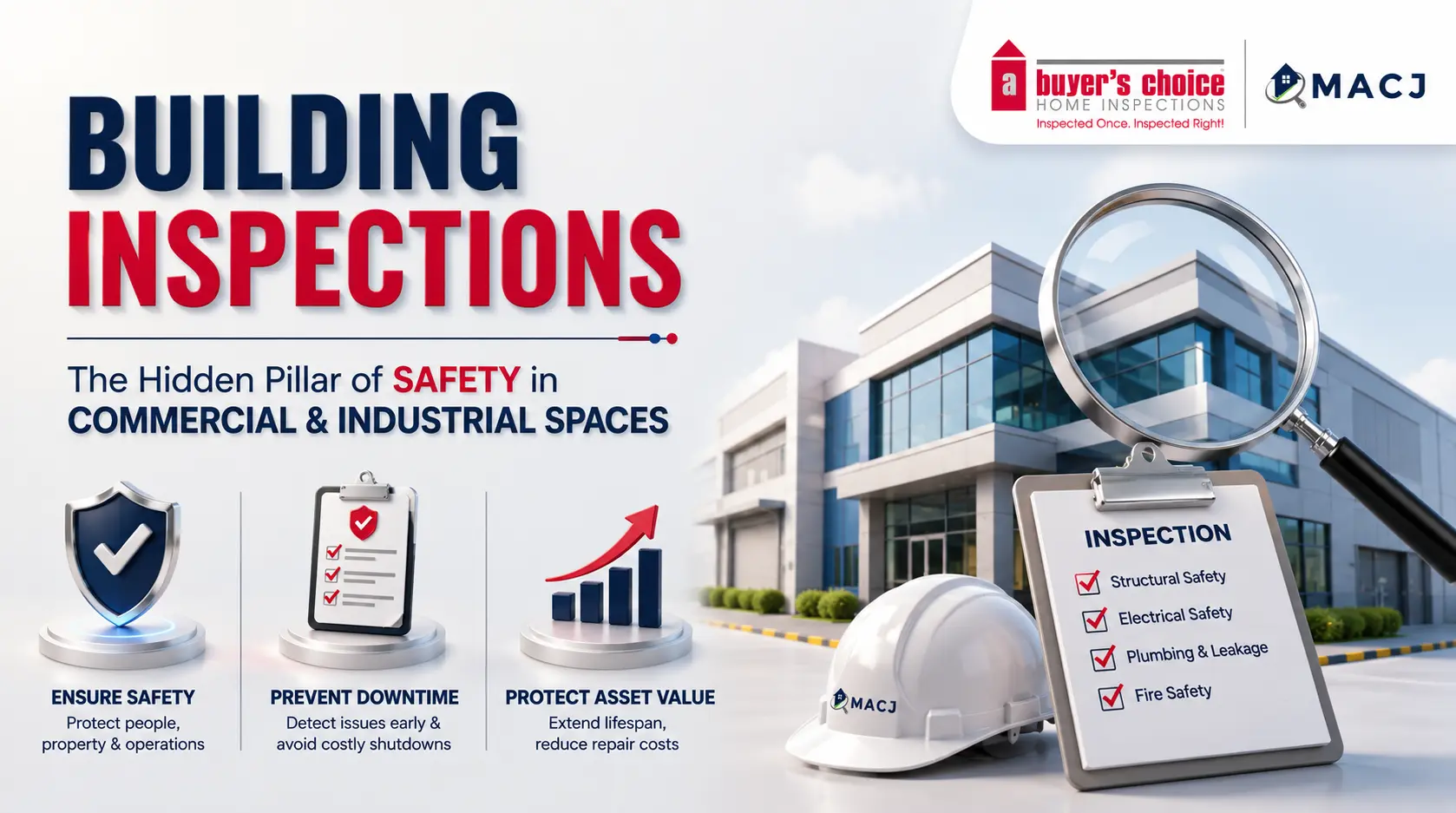
When it comes to commercial buildings, factories, warehouses, and institutional structures, safety isn’t optional—it’s foundational. But while most developers focus on visible aesthetics or compliance checklists, the real assurance of safety lies in third-party building inspections.
From identifying critical electrical faults to catching hidden structural defects, building inspections play a key role in protecting people, property, and profits—before they become liabilities.
🏗️ Why Building Inspections Are Crucial for Commercial & Industrial Premises
- Safety of Occupants and Operations
An unnoticed leak, faulty wiring, or weak flooring can lead to:
- Workplace injuries
- Equipment damage
- Fire hazards
- Legal liabilities
Routine inspections detect these issues early, preventing expensive consequences.
- Regulatory & Insurance Compliance
Insurers and government bodies are increasingly mandating:
- Electrical audit reports
- Structural stability certificates
- Fire and plumbing compliance
A certified inspection helps meet these requirements—and makes claim settlements smoother.
- Prevents Operational Downtime
Inspections can highlight early-stage damage in:
- HVAC systems
- Plumbing networks
- Damp-prone zones
- Expansion joints and roofs
Addressing these proactively prevents breakdowns and costly shutdowns.
- Protects Long-Term Asset Value
Buildings are high-value assets. Inspections protect this value by:
- Extending lifespan of systems
- Minimizing repair costs
- Improving documentation for future resale or lease
- A Must for Lease Renewals & New Tenants
Tenants—especially MNCs and institutions—are now demanding inspection reports before moving in or renewing leases.
Being able to share a certified third-party report builds trust and transparency.
Types of Inspections Typically Required
Civil Inspection: Seepage, cracks, tiling faults, dampness. Post-monsoon dampness and moisture issues can often indicate underlying building problems that require timely inspection.
- Civil Inspection: Seepage, cracks, tiling faults, dampness
- Electrical Inspection: Load balance, cable issues, fire hazards
- Plumbing Inspection: Water leakage, fixture faults, supply line review
- Thermal/Infrared Scans: Detect hidden moisture and insulation failures
- Fire Safety Readiness: Checking compliance with local fire norms
Final Thought
In commercial and industrial real estate, building inspections are not just technical audits—they are safety shields, cost savers, and credibility boosters.
If your space is not regularly inspected, you’re not just risking property—you’re risking people, productivity, and business continuity.
At MACJ – A Buyer’s Choice, we provide thorough, non-invasive inspections for commercial and industrial buildings—delivering safety you can see, and confidence you can show.
Follow MACJ on Instagram for home inspection tips, property maintenance insights and expert advice.
