Land Aggregation vs. Traditional Land Buying: What Every Developer Should Know
Land Aggregation vs. Traditional Land Buying: What Every Developer Should Know
Land is the foundation of every real estate project—but how you acquire it can shape everything from timeline to ROI.
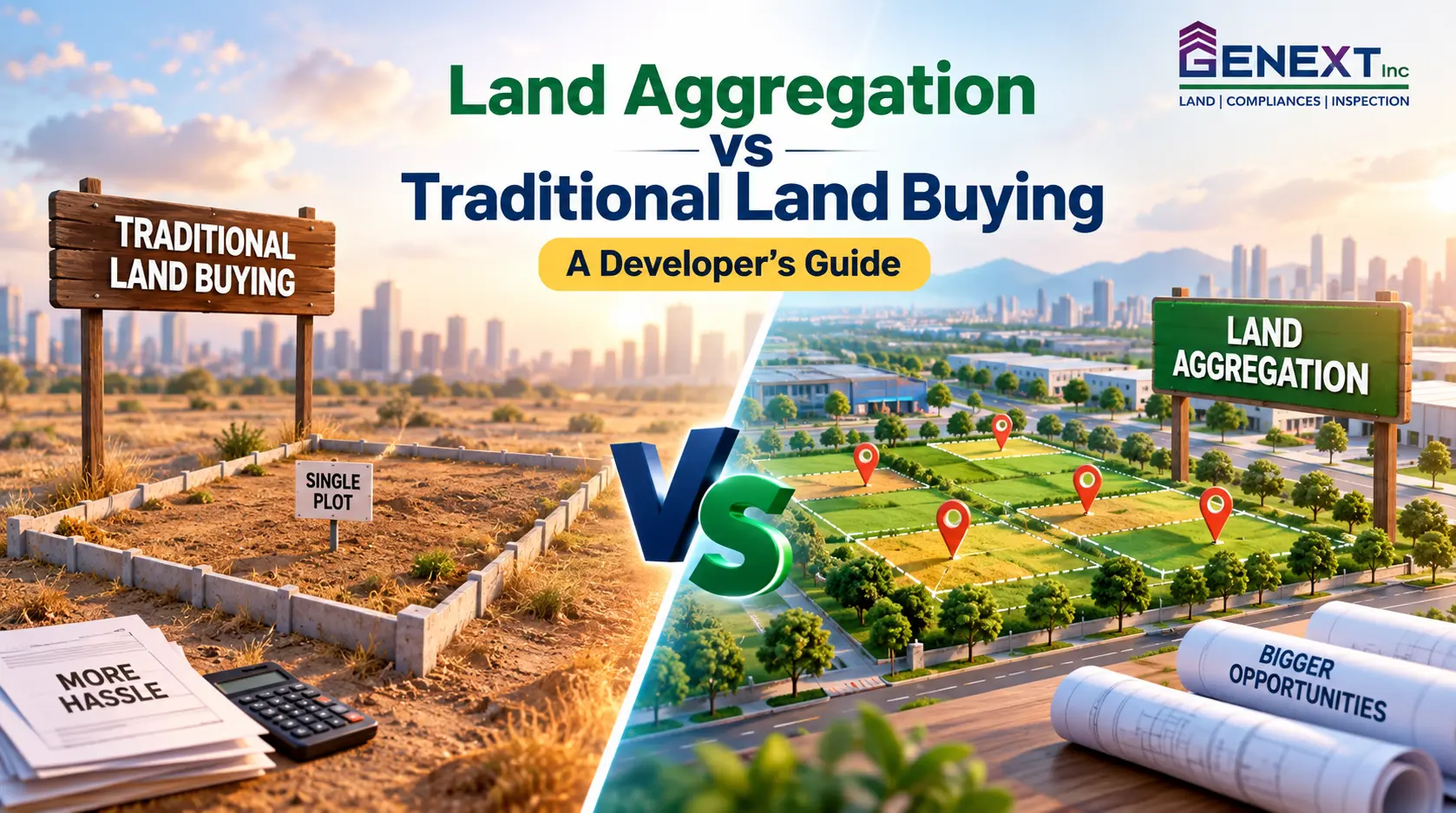
Traditionally, developers would search for a large single-owner plot and negotiate directly. But as demand rises and large parcels become scarce, land aggregation is fast becoming the smarter, more scalable route.
If you’re a developer, industrialist, or institutional planner, here’s a breakdown of how land aggregation compares to traditional land buying—and why it often wins.
Traditional Land Buying: Limitations in Today’s Market
- Limited Availability
Large, single-owner industrial or commercial plots are rare, especially in well-connected locations. This limits flexibility and often forces compromises on location or size.
- Higher Price per Acre
Because these plots are already consolidated, sellers demand a premium. In competitive zones, that can raise project costs by 15–30%.
- Slower Due Diligence
Even a single-owner sale may require exhaustive due diligence—especially for older land titles, encumbrance checks, and zoning verification.
Land Aggregation: A Smarter Alternative
- Scales Flexibly
Developers can acquire 10–200 acres by aggregating smaller adjoining plots. This offers flexibility in master planning, zoning, and phasing.
For a deeper understanding of the industrial land acquisition process, explore our complete guide to industrial land acquisition in India.
- Lower Per-Acre Cost
By working with individual landowners directly (via an aggregator), developers often secure more competitive pricing.
- Tailored for Compliance
Good aggregators pre-filter land based on zoning, CLU eligibility, and legal clarity—reducing regulatory risks.
- Faster Negotiation via Centralized Coordination
Instead of negotiating with multiple owners yourself, aggregation partners handle it—shortening acquisition cycles.
When to Use Which?
| Factor | Traditional Buying | Land Aggregation |
| Plot Size Needed | Small to Mid-sized (1–5 ac) | Mid to Large (10–200+ ac) |
| Speed of Acquisition | Slower | Faster (with experienced team) |
| Budget Flexibility | Higher cost | Optimized per acre |
| Compliance Support | Minimal | Strong (with right partner) |
| Planning Flexibility | Fixed | Custom layouts possible |
Conclusion
Land aggregation isn’t just a workaround for scarce land—it’s a strategic method that aligns better with scale, speed, and compliance, especially for industrial, warehousing, or institutional projects.
If you’re still relying on traditional land buying, it may be time to explore the aggregated path—and get a stronger foundation for your development.
Looking for expert guidance on land aggregation, industrial land acquisition, and real estate approvals? Connect with Genextinc. on LinkedIn for industry insights and updates.
