Planning to Aggregate Land for Industrial or Institutional Use? Don’t Miss These Key Factors
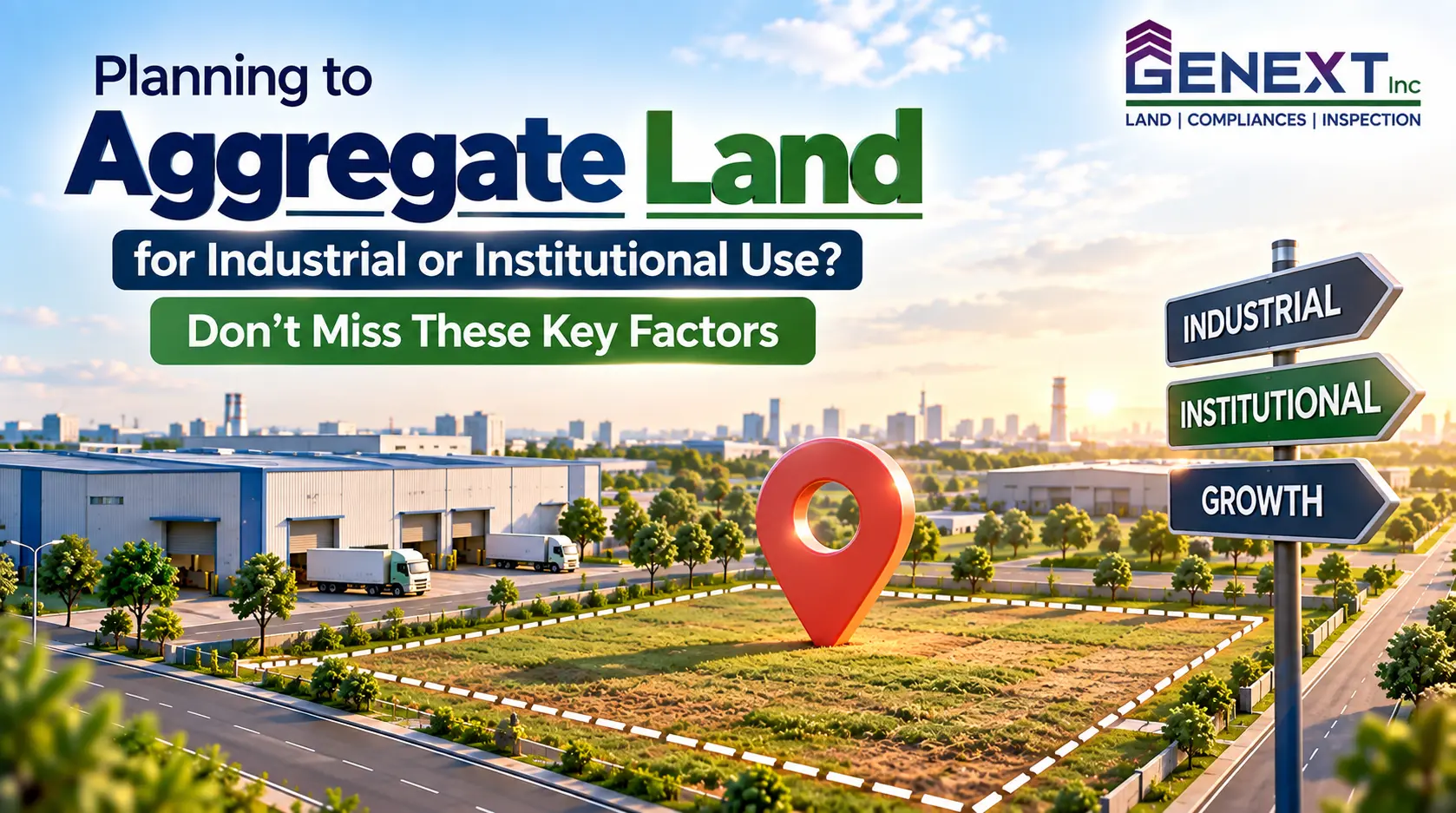
Planning to Aggregate Land for Industrial or Institutional Use? Don’t Miss These Key Factors
Land aggregation is a strategic process—but it’s not just about acquiring adjacent plots. When you’re aggregating land for industrial or institutional development, you must align legal, technical, regulatory, and practical elements to ensure a seamless project execution.
A single oversight can delay approvals, disrupt layout planning, or inflate infrastructure costs.
Here’s a breakdown of the top factors every developer or aggregator must consider when assembling land for industrial or institutional use.
1. Zoning & Master Plan Compatibility
Is the land located in a zone designated for industrial, institutional, or mixed use?
📍 Tip: Refer to the official development plan or master plan from the local authority. Don’t assume based on nearby use.
2. CLU (Change of Land Use) Eligibility
Even if the land is well located, if it’s agricultural or residential in status, it may not be usable until the CLU is granted.
📍 Tip: Aggregation partners should pre-check CLU feasibility for all parcels involved.
3. Contiguity & Layout Shape
Non-contiguous or oddly shaped plots can complicate site layout, road access, and utility planning. Irregular layouts may also lead to zoning rejections.
📍 Tip: Aim for parcels that form a clean, rectangular or grid-style tract with planned access.
4. Legal Clarity & Title Chain
Each parcel in the aggregation must be free from:
- Litigation
- Ownership disputes
- Encumbrances or mortgages
📍 Tip: Conduct a title search and mutation check for each Khasra/Khewat included.
5. Infrastructure Access (Power, Roads, Water)
Large-scale projects require:
- Road width for trailers
- Nearby substations or HT lines
- Water sources (canal, borewell, STP)
📍 Tip: Assess infrastructure readiness at the aggregation stage to avoid costly retrofits.
For a broader understanding of how industrial parks can influence land value and development potential, explore our guide on private industrial parks and land valuation models.
6. Environment & Topography
Low-lying plots, flood-prone areas, or high groundwater zones can derail construction feasibility.
📍 Tip: Conduct a physical survey with soil testing and check CGWA norms for groundwater usage.
7. Community Buy-in
Local opposition or resistance from landowners in the region can stall projects.
📍 Tip: Use experienced negotiators or community liaisons during aggregation to build goodwill.
Final Thought
Land aggregation isn’t just a property transaction—it’s a development strategy.
By considering the technical, legal, and infrastructure aspects upfront, you ensure that your industrial or institutional project starts on a strong and compliant foundation.
Aggregating land the right way saves time, secures approvals, and unlocks true long-term value.
Stay updated on real estate approvals, land aggregation, industrial development, and compliance insights by following Genext Inc. on LinkedIn.
