CLU, EC, RERA, Fire NOC & More: The Must-Have Approvals Every Builder Needs in India
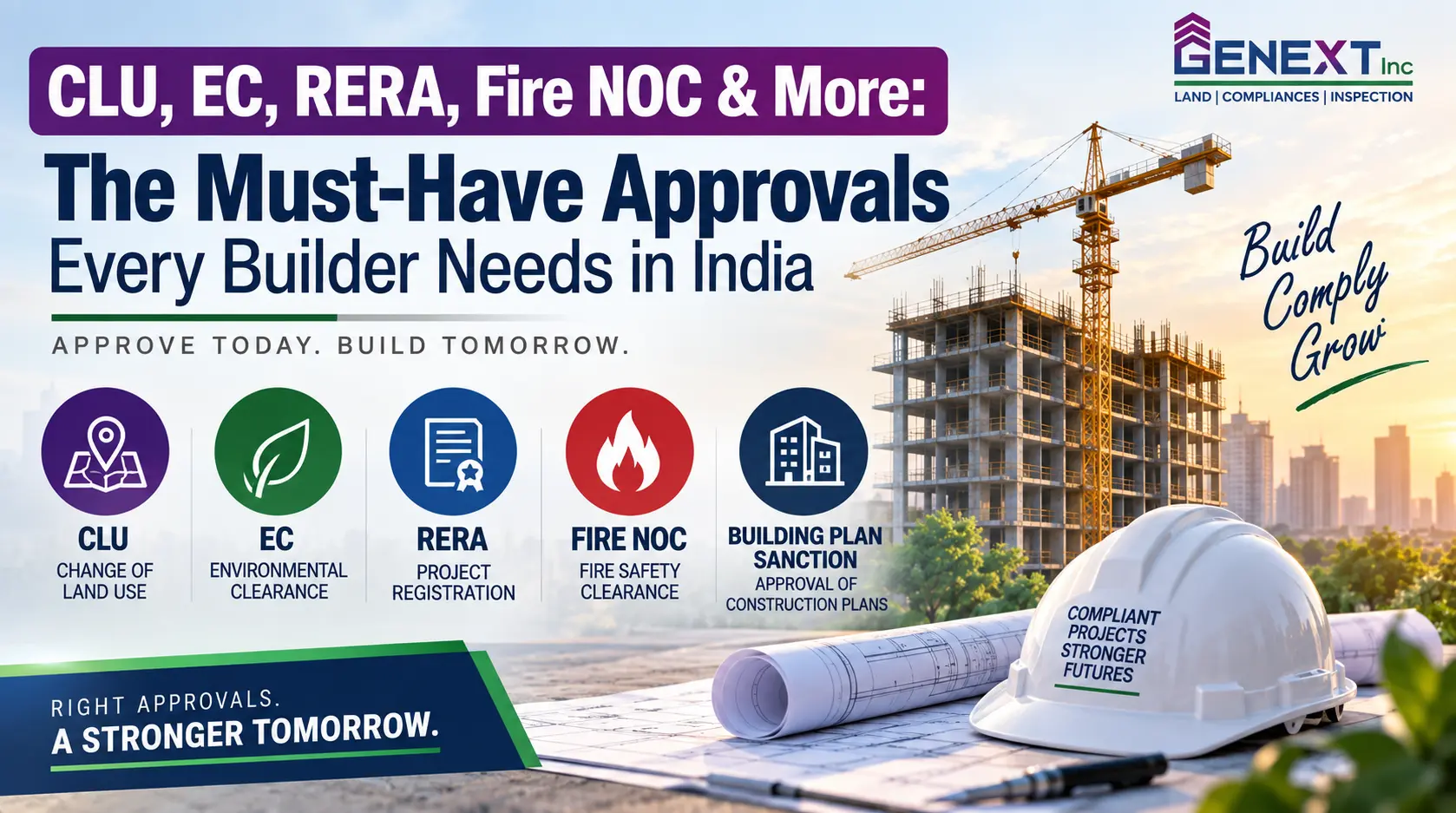
CLU, EC, RERA, Fire NOC & More: The Must-Have Approvals Every Builder Needs in India
Real estate in India operates under a dense web of local, state, and central regulations. Builders who overlook even a single approval risk project halts, financial penalties, and long-term legal complications.
This guide focuses on the most critical real estate approvals—what they are, when they’re required, and why skipping them is not an option.
1. CLU (Change of Land Use)
- What it is: Permission to convert agricultural/residential land to industrial, commercial, or institutional use.
- Who issues it: Town & Country Planning Department (State level)
- When you need it: Before applying for any construction-related permission.
📍 Without CLU, any construction is deemed unauthorized—even if you have building plans.
2. EIA (Environmental Impact Assessment) & EC
- What it is: Assessment and clearance for potential environmental risks.
- Who issues it: State Environment Impact Assessment Authority (SEIAA) or Ministry of Environment (for large-scale projects)
- When you need it: For projects crossing built-up thresholds or near eco-sensitive zones.
📍 Missing EC can delay funding and cancel construction approvals.
3. RERA Registration
- What it is: Mandatory project registration under the Real Estate Regulation and Development Act.
- Who issues it: State Real Estate Regulatory Authority
- When you need it: If you’re selling apartments, plots, or commercial units to buyers.
📍 Without RERA, sales are illegal—and trust deficit builds with buyers and investors.
4. Fire NOC (No Objection Certificate)
- What it is: Clearance from the Fire Department based on fire exits, sprinklers, hydrants, etc.
- Who issues it: State Fire Services Department
- When you need it: Before construction begins, and again before applying for Occupancy Certificate.
📍 Crucial for high-rise, commercial, industrial, or institutional buildings.
5. Building Plan Sanction
- What it is: Approval of the construction blueprint—site layout, floor area, parking, open spaces.
- Who issues it: Local Development Authority or Municipal Corporation
- When you need it: Before laying the first brick.
📍 Even one change to the plan requires resubmission and fresh approval.
6. Completion and Occupancy Certificates
- Completion Certificate (CC) – Confirms construction as per sanctioned plan
- Occupancy Certificate (OC) – Declares the building fit for use
📍 No OC = no legal possession or utilities connection.
Why Builders Must Prioritize Approvals
- Delays in one approval can cascade into timeline and budget overruns
- Banks and institutional investors require approval visibility before disbursement
- Buyers now demand RERA-backed, approval-ready projects Learn how compliance gaps can be identified during authority site inspections in our guide, Compliance Gaps Found During Authority Site Inspections.
Final Thought
Approvals are not hurdles—they’re essential building blocks for a legally sound and financially viable real estate project.
Builders who plan these approvals upfront—and partner with compliance experts—build faster, safer, and with complete peace of mind. Follow Genextinc on LinkedIn for more insights on real estate compliance, approvals, and inspections.
