Buying Factory Land? Watch Out for These Common Pitfalls
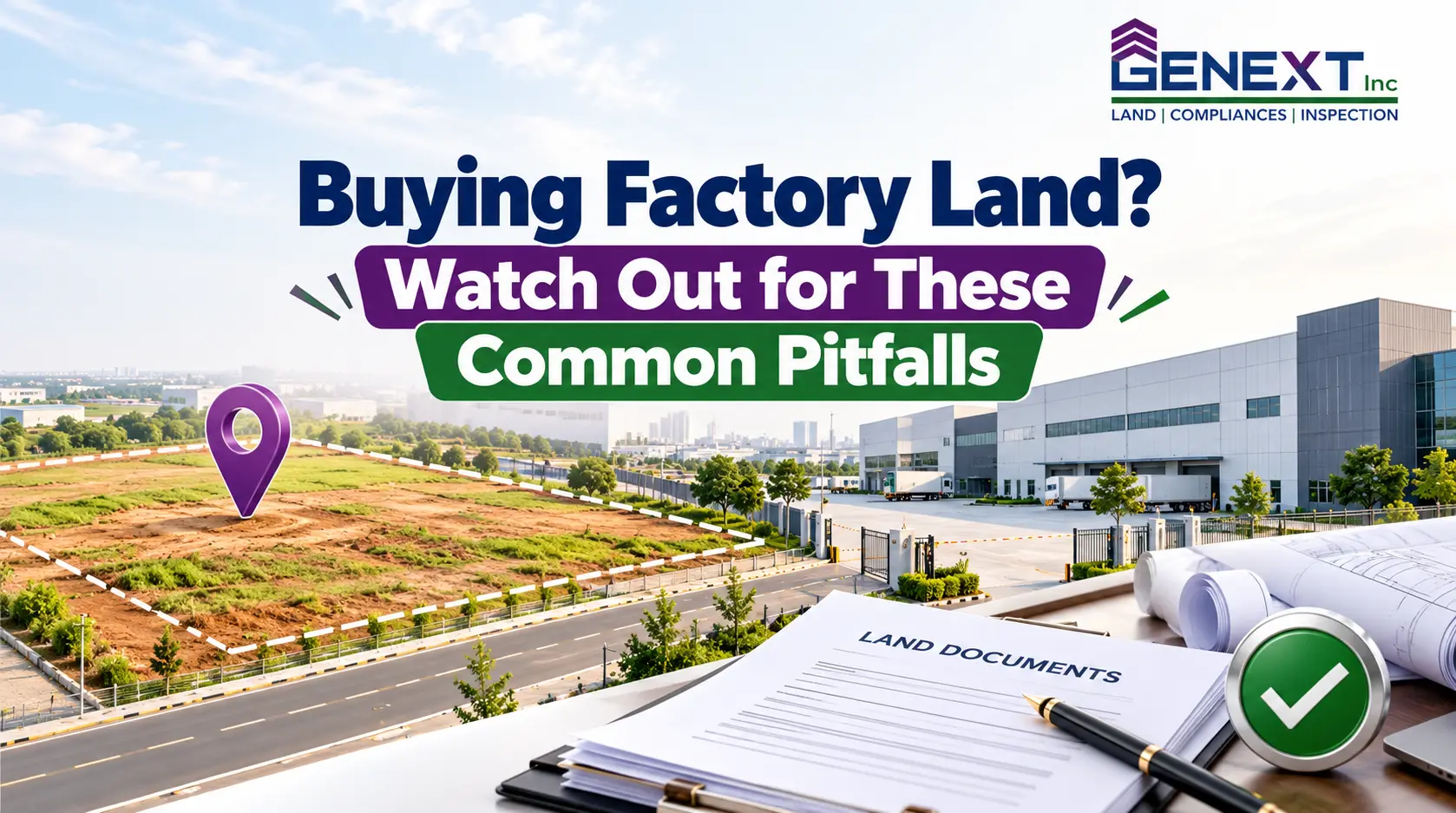
Buying Factory Land? Watch Out for These Common Pitfalls
Investing in factory land is a critical decision for manufacturers, industrialists, and real estate developers. It involves not just high capital but also operational, regulatory, and environmental responsibilities. Yet, many buyers focus only on the land cost and location—overlooking deeper issues that can lead to legal trouble, project delays, or long-term losses.
Before finalising a purchase, businesses should understand the complete process of industrial land acquisition in India, including land verification, legal documentation, land-use requirements, and due diligence. Read our complete guide to industrial land acquisition in India to learn more about the key considerations involved.
Here’s a guide to the most common issues in factory land purchases—and how to avoid them.
1. Lack of Clear Title or Encumbrance
Many industrial land parcels, especially in semi-urban or rural belts, have unclear ownership history or existing mortgages.
✅ Tip: Always get a thorough title search done and request an encumbrance certificate for at least 30 years.
2. No CLU (Change of Land Use) Clearance
Land used for agriculture or residential purposes must be converted to the right use through formal government permission (CLU). Skipping this can result in demolition notices or heavy penalties or business closure.
✅ Tip: Hire a consultant or legal expert to verify CLU and zoning status before purchasing.
3. Environmental & Groundwater Restrictions
Some zones fall under critical groundwater areas or are protected due to environmental impact concerns. These restrictions can prevent you from setting up borewells, treating waste, or getting clearances.
✅ Tip: Refer to CGWA notifications and local pollution board guidelines for land-specific restrictions.
4. Access & Road Connectivity
A piece of land without a legal access road, especially for heavy vehicles, can kill factory logistics. This is often missed in initial checks.
✅ Tip: Check road width, right-of-way permissions, and turning radius for trailers if logistics is a core need.
5. High-Tension Lines, Pipelines, or ROW (Right of Way)
HPCL pipelines, electricity lines, or public infrastructure corridors might pass through the land. These are often visible but rarely checked for legal restrictions.
✅ Tip: Get a physical survey and request a ROW clearance report if any utility line exists on site.
Conclusion
Factory land isn’t just about location and price. It’s about legality, feasibility, and future-proofing. A professional due diligence process—often including engineering and legal inspections—is the best way to protect your investment and build with confidence.
For more insights on industrial land acquisition, real estate approvals, and regulatory compliance, follow Genext Inc. on LinkedIn.
