2026 Warehousing Compliance Checklist for FMCG, Pharma & E-Commerce
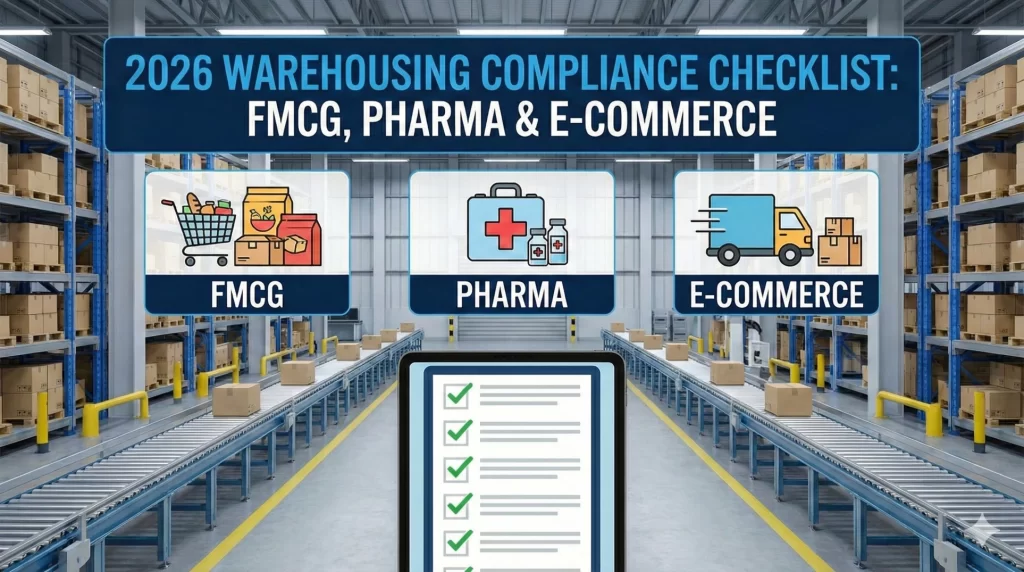
India’s warehousing ecosystem is expanding faster than ever, driven by the explosive growth of e-commerce, rapid supply chain reforms, and rising demand from FMCG and pharmaceutical sectors.
But with increased activity comes heightened regulation. Warehouses in 2026 must comply with stricter norms around safety, environment, operational processes, and digital governance.
Whether you operate, lease, or plan to build a warehouse, understanding India’s evolving compliance framework is essential for operational continuity and avoiding costly penalties.
This detailed checklist provides a sector-focused breakdown for FMCG, pharma, and e-commerce warehousing in 2026.
1. Statutory Approvals & Licenses Required in 2026
a) Mandatory Core Approvals (for all warehouses)
- CLU / Land Use Permission from state authorities
- Building Plan Approval aligned with NBC 2016
- Occupation Certificate (OC) for operational readiness
- Factory License (if applicable for packaging/processing units)
- Trade License from local municipal authorities
- Fire NOC as per state fire norms and latest NBC amendments
- CGWA Approval (if groundwater extraction is required)
- Pollution NOC – CTE/CTO from State Pollution Control Board
- Weight & Measurement Certification for weighing systems
- Electricity Load Sanction based on operational category
Selecting the right land is the first step toward developing a compliant warehouse facility. Businesses planning long-term industrial expansion should evaluate land availability, future growth potential, and strategic location advantages. Learn more about land banking strategies for long-term industrial growth to make informed industrial investment decisions.
These compliances apply across FMCG, pharma, and e-commerce warehouses.
2. Fire & Life Safety Compliance (Mandatory for 2026)
India updated multiple fire-safety norms in 2024–25, making compliance non-negotiable.
Key requirements:
- Automatic sprinkler system
- Smoke & heat detection systems
- Sufficient fire hydrants, hose reels & extinguishers
- 6m fire tender movement road around premises
- Emergency exits with photoluminescent markings
- Fire-rated doors & walls
- Annual fire-safety audit
- Storage height compliance (especially for ecommerce & FMCG)
Warehouses with mezzanine floors must comply with stricter load bearing, escape route, and sprinkler height norms.
3. Sector-Specific Compliance Requirements
A) FMCG Warehouses (Food, Personal Care, Daily-use Goods)
FSSAI Compliance
- FSSAI Registration or License (mandatory)
- Hygienic storage zones with pest-proofing
- Temperature & humidity control for perishables
- FIFO/FEFO-based inventory system
- Periodic sanitation & fumigation records
Consumer Protection Compliance
- Product storage as per packaging requirements
- System for handling returns and damaged goods
B) Pharma Warehousing (APIs, Medicines, Medical Devices)
CDSCO & Drugs Act Compliance
- Drug Storage License (Form 20B/21B/21C)
- Temperature-controlled storage (15–25°C or cold chain 2–8°C)
- Calibrated data loggers with 24×7 monitoring
- WHO-GSDP (Good Storage & Distribution Practices)
- Controlled access for narcotics & schedule drugs
- SOPs for handling expired & recalled products
All pharma warehouses must implement:
- Backup power with 100% DG support
- Validation reports for HVAC systems
- Cleanliness & contamination-control audits
C) E-Commerce Warehousing (Fulfilment Centres, Last-Mile Hubs)
Mandatory 2026 norms:
- Automated material handling safety compliance
- CCTV coverage across receiving → packing → dispatch
- Packaging waste audit (Plastic Waste Management Rules)
- Occupational safety compliance for high-activity zones
- Worker safety training for conveyor & robotics areas
- RFID/Barcode integration to avoid inventory disputes
E-commerce warehouses may also require special approvals if they run kitchens, packing lines, or repair centres.
4. Structural & Building Compliance
- NBC 2016 compliant building structure
- Soil & foundation stability certification
- Seepage-free flooring with anti-skid coating
- Adequate ventilation and lighting
- Solar-ready rooftop (in many states recommended/mandatory)
- Rainwater harvesting compliance
- Clear height standards:
- 9–12m normal warehouse
- 12–14m+ Grade A warehouse
- Dock levellers with anti-crush bumpers
5. Labour, EHS & Operational Compliance
Labour Laws
- Shops & Establishment Registration
- ESIC, PF, Contract Labour Compliance
- Daily muster roll and wages compliance
EHS (Environment, Health & Safety)
- Safety induction training
- PPE compliance (helmets, gloves, shoes)
- Hazard signage across zones
- First-aid kits & medical room for large facilities
- Waste segregation as per Solid Waste Rules
6. Digital Compliance & Technology Requirements
India’s warehousing is moving towards complete digital governance.
In 2026, warehouses must adopt:
- E-way bill integration
- GST invoicing compliance
- Digital CCTV minimum 90-day storage
- Visitor & vehicle digital logs
- RFID/barcode-based track-and-trace (sector dependent)
- Data protection compliance under the DPDP Act 2023
7. Monthly & Annual Mandatory Audits
Warehouses (especially pharma & FMCG) must maintain audit consistency:
Monthly
- Pest control
- Fire safety equipment testing
- Temperature/humidity calibration
Quarterly
- Fire & EHS audit
- Electrical load audit
Annual
- Fire NOC renewal
- Pollution NOC renewal
- FSSAI (where applicable)
- Structural audit
Conclusion
Warehousing in 2026 in India is no longer about storage alone—it is about compliance-driven, safe, efficient, and digitally integrated operations.
Whether in FMCG, pharma, or e-commerce, ensuring end-to-end compliance protects businesses from operational disruptions, reputational damage, and legal penalties.
A strong compliance framework not only ensures safety but also enhances speed, accuracy, and overall supply chain efficiency.
Stay updated with the latest industrial real estate, warehousing, compliance and land-related insights from Genext Inc. Follow Genext Inc. on Facebook for more updates.
