Understanding Land Banking Strategies for Long-Term Industrial Growth
As India’s industrial landscape expands through infrastructure development, manufacturing incentives, and logistics-led growth, one strategy is gaining renewed attention among developers, corporates, and institutional investors—land banking.
Unlike short-term land acquisition aimed at immediate construction, land banking is a forward-looking approach. When executed strategically, it enables long-term scalability, cost control, and alignment with future infrastructure and policy developments.
This article explains what land banking means in an industrial context, why it matters, and how stakeholders can structure it effectively.
What Is Land Banking in Industrial Real Estate?
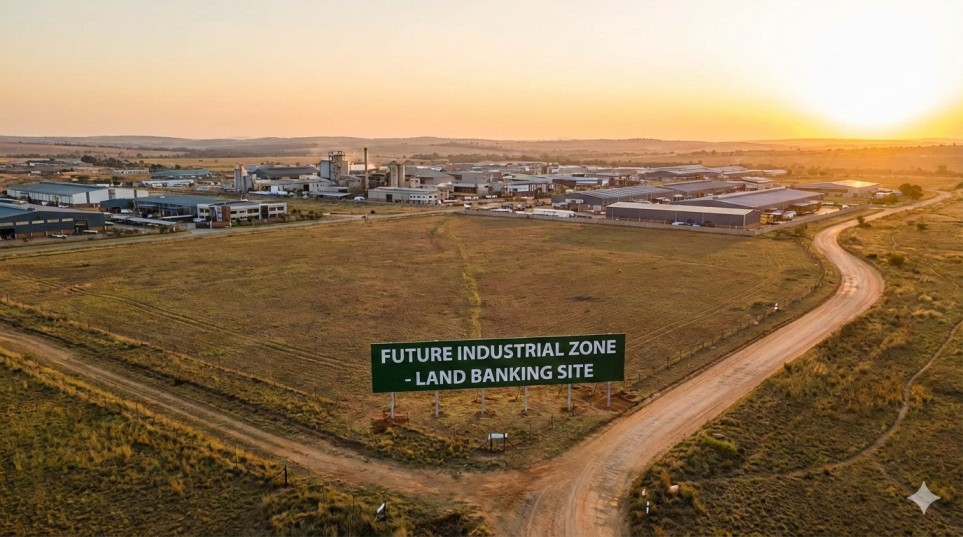
Land banking refers to the strategic acquisition and holding of land parcels for future industrial or infrastructure development. The objective is not immediate construction, but:
- Securing land at lower acquisition costs
- Aligning with upcoming infrastructure projects
- Preparing for future zoning or land-use changes
In industrial real estate, land banking is typically associated with:
- Manufacturing clusters
- Warehousing and logistics corridors
- Data centres and industrial parks
- Institutional and mixed-use industrial zones
Why Land Banking Is Critical for Long-Term Industrial Growth
1. Limited Availability of Contiguous Industrial Land
As industrial activity intensifies, large contiguous land parcels are becoming scarce—especially near expressways, rail hubs, ports, and urban peripheries.
Land banking allows stakeholders to:
- Secure scale early
- Avoid fragmented acquisitions later
- Preserve future expansion flexibility
2. Cost Optimization Over Time
Industrial land values often appreciate significantly once:
- Infrastructure is announced or completed
- Zoning changes are notified
- Industrial corridors become operational
Early land banking helps mitigate:
- Price escalation
- Speculative pressure
- Acquisition competition
3. Alignment With Infrastructure-Led Growth
Many industrial growth zones evolve over time due to:
- Expressways
- Freight corridors
- Logistics parks
- Airport and port connectivity
Land banking enables developers to position assets ahead of such transformations rather than react to them.
4. Faster Project Execution in the Future
Projects on pre-aggregated land benefit from:
- Reduced acquisition timelines
- Better planning control
- Easier regulatory alignment
This is particularly valuable for corporates planning phased manufacturing or warehousing expansion.
Key Considerations Before Adopting a Land Banking Strategy
1. Land Aggregation and Contiguity
Fragmented land reduces the effectiveness of land banking. Aggregated, contiguous parcels:
- Improve future feasibility
- Enhance valuation
- Simplify approvals
2. Regulatory and Zoning Clarity
Before banking land, it is essential to assess:
- Existing land use classification
- Master plan alignment
- Potential CLU feasibility
Holding land with uncertain regulatory outcomes can lock capital without clarity.
3. Title and Revenue Record Due Diligence
Long-term holding amplifies the importance of:
- Clear ownership chains
- Updated mutation records
- Absence of encumbrances
Any unresolved issue compounds over time.
4. Holding Costs and Compliance
Land banking involves ongoing responsibilities such as:
- Property tax obligations
- Land use compliance
- Boundary protection and encroachment risk
These must be factored into long-term planning.
Who Should Consider Industrial Land Banking?
- Large manufacturers planning phased capacity growth
- Logistics and warehousing developers targeting corridor-based expansion
- Institutional investors seeking long-hold industrial assets
- Data centre and infrastructure developers with high land certainty requirements
Risks of Unstructured Land Banking
Without a strategic framework, land banking can result in:
- Capital being locked in non-developable land
- Regulatory deadlocks
- Fragmented expansion potential
- Reduced asset liquidity
Hence, land banking must be guided by feasibility analysis, compliance insight, and infrastructure mapping.
Conclusion
Land banking is not about holding land—it is about holding the right land, in the right location, with the right future potential.
As industrial development in India becomes increasingly structured and compliance-driven, land banking emerges as a powerful tool for long-term growth—when backed by disciplined aggregation, regulatory foresight, and infrastructure alignment.
