
Understanding Fire Safety Norms for Warehouses Under the Latest NBC Amendments
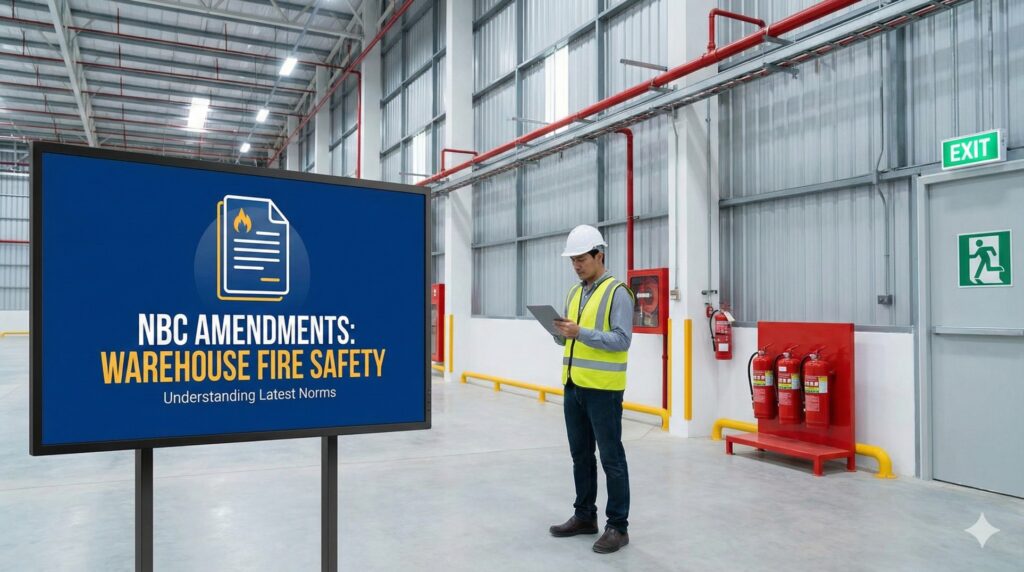
Warehouses in India are growing rapidly due to the expansion of e-commerce, retail, FMCG, manufacturing, and third-party logistics. As storage volumes increase and operations become more automated, the risk of fire incidents has also risen significantly. Recognizing this, the National Building Code (NBC) has introduced important amendments in recent years to strengthen safety standards for warehouses and large storage facilities.
For developers, warehouse operators, and industrial investors, understanding these NBC updates is essential—not only for regulatory compliance but also for operational safety, insurance acceptance, and business continuity.
This blog explains the latest NBC requirements, key changes, and their impact on industrial and logistics projects across India.
1. Why Warehouses Need Stricter Fire Norms
Modern warehouses store:
- High-density packaged goods
- Flammable materials like carton boxes, chemicals, paper, plastics
- Palletized goods stacked up to 12–18 meters
- Automated conveyor systems
- Electrical and battery-operated machinery
- Multi-level mezzanines
A small fire can spread rapidly due to:
- Vertical stacking
- Packaging material
- Poor ventilation
- High combustible load
- Long travel distances within large warehouses
The NBC revisions address these challenges directly.
2. Key NBC Amendments Impacting Warehouses
2.1 New Classification for Storage Facilities
NBC now clearly differentiates between:
- Low-hazard storage (non-combustible goods)
- Moderate-hazard storage (general goods, FMCG, consumer goods)
- High-hazard storage (chemicals, plastics, flammable liquids, industrial materials)
This classification defines required:
- Fire suppression systems
- Compartmentation
- Travel distances
- Detection systems
- Fire resistance ratings
Warehouse developers must identify the hazard category early during planning.
2.2 Fire Compartmentation Requirements
NBC mandates fire compartmentation based on storage height and hazard type.
Typical requirements include:
- Fire walls with 2–4 hours fire resistance
- Separation of high-risk areas like battery charging rooms
- Compartmentalized mezzanine floors
- Fire-rated rolling shutters between sections
- Vertical fire barriers for multi-rack storage
This helps prevent rapid fire spread across large areas.
2.3 Mandatory Automatic Fire Suppression Systems
Automatic sprinkler systems are now essential for:
- High-rise storage (≥ 9 meters)
- Moderate and high-hazard goods
- Racked storage
- Automated warehouses
- Large warehouses >3000 sq. m
Types include:
- Conventional sprinklers
- ESFR (Early Suppression Fast Response) sprinklers
- In-rack sprinklers
- Foam-based suppression for chemical storage
ESFR sprinklers are strongly recommended for modern warehouses with tall pallet racks.
2.4 Hydrant and Hose Reel Systems
The NBC amendments require:
- External fire hydrants around the building perimeter
- Internal hydrants and hose reels at strategic points
- Fire pumps compliant with latest standards
- Dedicated water storage tanks with redundancy
- Clearly marked hydrant points with unobstructed access
This ensures rapid response capability.
2.5 Smoke Detection & Alarm Systems
All warehouses must install:
- Addressable fire alarm systems
- Smoke and heat detectors
- Beam detectors for high-ceiling warehouse bays
- Manual call points (MCPs) every 30 meters
- Fire alarm control panels accessible to emergency teams
Beam detectors are particularly important for buildings with tall ceilings.
2.6 Emergency Exits and Travel Distance Norms
NBC mandates that warehouses must ensure:
- Minimum two exits from every compartment
- Clearly illuminated exit paths
- Maximum travel distance limits based on hazard type
- Emergency lighting with battery backup
- Well-marked, unobstructed escape routes
Large warehouses should also include evacuation assembly points.
3. Electrical and Operational Safety Requirements
To prevent ignition sources, NBC updates include:
Electrical Safety
- Use of industrial-grade wiring and fire-resistant cables
- Separate electrical rooms with fire-rated enclosures
- Regular maintenance of switchgear and panels
- Arc fault detection devices (AFDDs) recommended
Battery Charging Areas
- Fire-rated enclosures
- Adequate ventilation
- Spark-proof equipment
- Dedicated fire extinguishers
Material Handling Equipment (MHE)
NBC recommends regular inspection of forklifts, chargers, conveyors, and automated equipment.
4. Structural Fire Protection
Large warehouses must provide:
- Fire-resistant structural steel
- Protection coatings (intumescent paint)
- Fire-rated roofing and insulation
- Heat release-resistant façade elements
This prevents building collapse during fire incidents.
5. Fire Safety Management Requirements
The code emphasizes operational fire management, including:
- Periodic fire drills
- Appointment of trained fire marshals
- Maintenance of all suppression and detection systems
- Availability of MSDS sheets for hazardous goods
- Coordination with local fire departments
Large logistics players are now adopting digital fire audit tools for continuous compliance.
6. Implications for Developers and Businesses
For Developers
- Better approval compliance
- Higher acceptance from insurers
- Increased leasing value
- Faster approvals in industrial zones
- Lower long-term operational risks
For Tenants & Operators
- Reduced downtime
- Lower insurance premiums
- Protection of goods and machinery
- Improved worker safety
For Manufacturers & E-commerce
- Safer high-volume storage
- Confidence in automated systems
- Compliance with ESG and safety audits
Conclusion
The latest NBC amendments mark a major step forward in modernizing India’s warehousing and industrial ecosystem. With stricter norms on fire suppression, compartmentation, MHE safety, exit planning, and digital detection, warehouses can operate with far greater reliability and safety.
For developers, operators, and investors, compliance is no longer optional—it is a crucial foundation for sustainable and risk-free industrial growth.
