The Most Overlooked Plumbing Issues Detected in Year-End Home Inspections
As the year draws to a close and temperatures begin to drop across many regions in India, homeowners often notice new or recurring plumbing issues that went unnoticed during the rest of the year. This makes post-monsoon and year-end home inspections particularly critical, especially for apartments, villas, and commercial units that have been occupied for several years or recently handed over.
While most buyers or tenants look for leaks, damp walls, or faulty fixtures, the reality is that many plumbing problems hide behind tiles, false ceilings, shafts, and utility ducts. These issues not only affect comfort but can also lead to expensive repairs, disputes with builders, and long-term structural deterioration.
Here are the most commonly overlooked — yet high-impact — plumbing defects that professional inspectors detect during December-January inspections.
1️⃣ Concealed Pipe Leakages Behind Bathroom Tiles
One of the most frequent issues found in multi-storey buildings is concealed pipe seepage inside bathroom walls. These leaks are slow, invisible, and often ignored by residents until:
- The adjacent room wall becomes soft or swollen
- Tiles begin to crack or pop
- Paint starts bubbling
- White powdery salt deposits (efflorescence) appear
Year-end moisture levels make these signs even more visible. If not addressed early, this leads to full tile removal and major repair expenses.
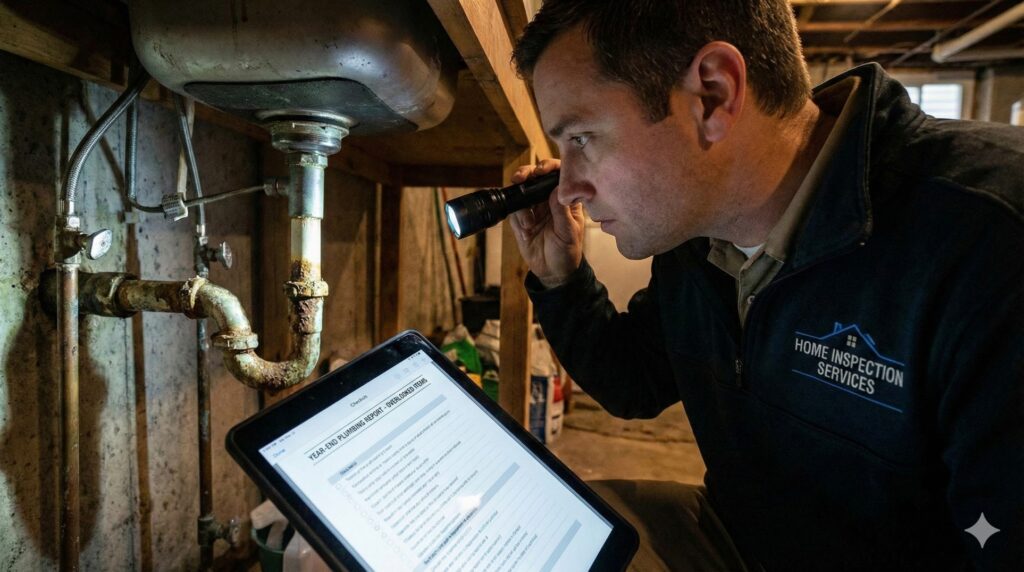
2️⃣ Faulty Trap Installation Under Washbasins & Kitchen Sinks
Traps (P-trap / S-trap) prevent foul smells and insects from entering the home through drainage lines. During inspections, we frequently identify:
- Improper trap slope
- Loose connections causing under-sink leakage
- Missing cleaning access
- Non-standard traps installed by fit-out teams
A small drip under the sink may look harmless but can cause permanent cabinet damage or fungal growth.
3️⃣ Low Water Pressure Due to Blocked Aerators & Scaling
Post-monsoon water contains more sediment and mineral deposits. Over time, these accumulate in:
- Faucet aerators
- Shower heads
- Angle valves
- Geyser inlets
Residents often report inconsistent water pressure or hot-water flow issues. Regular cleaning helps, but professional inspection identifies deeper pipeline scaling that may require flushing or partial replacement.
4️⃣ Poor Slope in Bathroom Flooring Causing Water Logging
Incorrect floor gradient is one of the most dangerous but overlooked issues. It results in:
- Water collecting near the WC area
- Slow drainage
- Standing water that damages grout and tiles
- Higher chance of seepage to lower floors
Slope measurements must be checked using laser tools — something not possible through visual inspection alone.
5️⃣ Hidden Leakage in Plumbing Shafts
Many high-rise buildings have common plumbing shafts that house vertical pipes. These areas often contain:
- Loose GI/CPVC joints
- Dripping elbows
- Poor insulation around hot/cold lines
- Unsealed wall penetrations
Since shafts remain closed, leakage continues unnoticed until it reaches:
- Lower floor ceiling
- Electrical conduits
- Adjacent apartments
Year-end inspections highlight these because humidity clearly shows seepage paths.
6️⃣ Geyser and Pipeline Safety Issues
Winter puts heavy load on geysers. Inspections often reveal:
- Incorrect wiring or absence of MCB
- Non-standard flexible pipes
- Leaking PRV (Pressure Relief Valve)
- Rusted mounting points
- Backflow issues in hot water systems
These may pose safety hazards if ignored.
7️⃣ Incorrect Sealant Application Around Wet Areas
Silicone sealant around:
- WC bases
- Shower glass
- Kitchen countertops
- Utility sinks
commonly cracks or gaps over time. Water seeps inside these gaps, causing mold and hidden dampness.
A year-end inspection ensures retouching is identified before it worsens.
🔍 Why Year-End Plumbing Inspections Matter
✔️ Post-monsoon months expose hidden moisture
✔️ Cooler temperatures reveal condensation issues
✔️ Water usage patterns during festivals highlight defects
✔️ Prevents expensive repair work before the next monsoon
✔️ Protects residents from mold, leaks, and structural damage
For homeowners planning to sell, rent out, or take possession of new units, this inspection becomes essential to validate the quality of plumbing work.
🛠️ Conclusion
Plumbing issues may seem minor at first, but they often become the root cause of deeper structural and electrical risks. A professional end-of-year home inspection ensures that hidden leakages, poor workmanship, and potential hazards are identified early — saving homeowners time, money, and stress.
