The Industrial Land Compliance Checklist Every Industrialist Must Follow
The Industrial Land Compliance Checklist Every Buyer Must Follow
Industrial land purchases are not just real estate transactions—they’re regulatory commitments. Whether you’re planning a factory, warehouse, or logistics hub, ignoring compliance can invite legal action, penalties, or even a complete project halt.
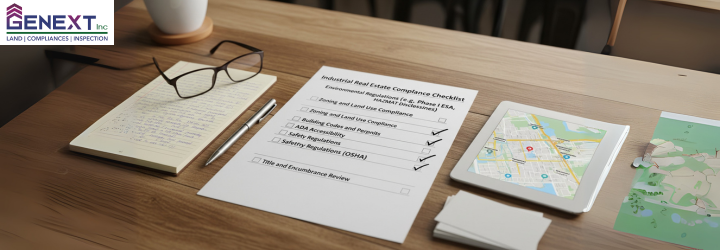
Before you finalize the land deal, here’s a comprehensive compliance checklist to safeguard your investment and ensure smooth operations.
1. CLU (Change of Land Use) Approval
The most fundamental compliance for industrial use. If the land is marked agricultural, residential, or green zone, you must apply for a CLU from the respective state authority.
✅ Tip: Ensure the CLU status is not under litigation and matches your intended use (e.g., light industry, logistics, etc.)
2. Zoning & Master Plan Alignment
Check the city or state’s master plan to ensure your land falls within an industrial zone or special economic zone (SEZ).
✅ Tip: Don’t rely only on seller claims—obtain official zoning maps.
3. Environmental Clearance
For certain industries, obtaining environmental clearance (EC) from the Pollution Control Board or MoEF is mandatory.
✅ Tip: Check if the land lies in an environmentally sensitive or groundwater-restricted area.
4. Building Plan Approval
Even after land purchase, your factory/warehouse layout must get approved by the local municipal or industrial authority based on height, FAR, and usage type.
✅ Tip: Factor this into your project timeline to avoid construction delays.
5. Fire Safety Compliance
Factories must follow the Fire Department’s guidelines for exit points, extinguishers, sprinklers, and emergency signage.
✅ Tip: Include fire compliance at the design stage itself.
6. Labor Laws & Industrial Licensing
If your facility will employ workers, ensure you’re compliant with:
- Factory Act
- ESI registration
- Shops & Establishments registration
- Labor welfare regulations
7. Electricity & Water Approvals
Industrial usage requires higher sanctioned loads and borewell/water connections. These need dedicated permits and may be restricted in some zones.
Why a Compliance Inspection Helps
Many of these checks require cross-verification with multiple departments: Town Planning, Pollution Control, Revenue, Power, Water, and Fire. A professional consultant or inspection team streamlines this process by conducting multi-point due diligence.
Final Thought
Compliance is not paperwork—it’s the backbone of any industrial project’s success. Don’t just buy land. Buy clarity, legality, and confidence.
Use this checklist before your next industrial land deal.
