
Post-Monsoon Dampness Issues: Why End-of-Year Inspections Are Critical
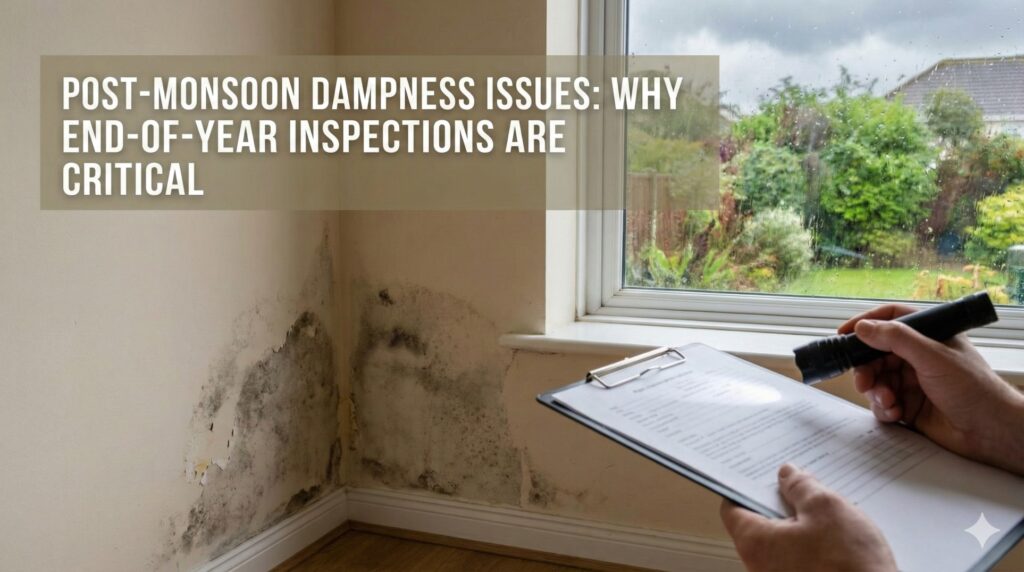
As the monsoon recedes, commercial buildings, industrial facilities, and high-value corporate spaces begin to reveal a silent troublemaker—post-monsoon dampness. What appears as minor discoloration or a faint musty smell often indicates deeper structural or safety-related issues.
This is why year-end building inspections have become a must-do step, especially for organizations preparing maintenance budgets, leasing decisions, facility upgrades, or pre-sale due diligence.
Why Dampness Surfaces After the Monsoon
Monsoons saturate building envelopes—walls, terraces, foundations, plumbing lines, electrical conduits. The damage doesn’t always show immediately because moisture sits trapped within materials.
Once humidity drops, this hidden moisture begins to migrate outward, revealing itself through:
- Patchy walls
- Ceiling stains
- Flaking paint
- Efflorescence (white salt deposits)
- Mold formation
- Damp smells
These are symptoms, not the root cause.
Key Areas Where Post-Monsoon Dampness Causes Serious Damage
1. External Walls & Façades
Hairline cracks widen during monsoon cycles and absorb water. If ignored, they lead to seepage inside offices, retail floors, and storage areas.
2. Roofs and Terraces
Weak membrane layers start failing after heavy rainfall. Water enters through joints, ducts, parapets, and tile gaps.
3. Basement and Sub-Structure Zones
These are high-risk pockets for concealed seepage due to poor drainage, hydrostatic pressure, or plumbing leaks.
4. Electrical Rooms & Panels
Moisture intrusion around conduits can corrode terminals and compromise fire safety standards.
5. False Ceilings & Ducting Areas
Hidden spaces trap moisture for weeks, leading to mold growth and air-quality issues.
Why Year-End Inspections Matter for Corporates & Industries
1. Budget Planning for the New Year
An inspection reveals the exact quantum of damage, helping businesses allocate accurate repair budgets for Q1 and Q2.
2. Preventing Operational Disruptions
Dampness can compromise machinery rooms, server racks, electrical junctions, and production zones. Early detection protects productivity.
3. Protecting Inventory & Assets
Warehouses are particularly vulnerable—dampness can damage packaging, electronics, perishables, and finished goods.
4. Lease Renewals or Pre-Handover Assessment
For tenants and landlords, year-end is often a contract checkpoint. Inspections document liability clearly and prevent disputes.
5. Ensuring Workplace Health & Safety
Mold growth affects indoor air quality and increases health risks for employees. Inspections help maintain compliance standards.
Most Common Post-Monsoon Defects Detected During Inspections
- Capillary rise dampness from foundations
- Cracks in external plaster and façade junctions
- Poor waterproofing in terraces, sunken areas, and washrooms
- HVAC duct condensation and mold
- Plumbing line seepage behind walls
- Faulty drainage slopes leading to water stagnation
- Basement water intrusion through expansion joints
Each defect has a different origin—and requires a specialist to trace the source accurately.
The Advantage of Professional End-of-Year Inspections
Professional inspection teams use tools like moisture meters, infrared cameras, thermal scanners, and hygrometers to identify issues that aren’t visible to the naked eye.
Rather than temporary cosmetic fixes, this approach reveals the actual root cause, helping businesses:
- Avoid repetitive repair expenses
- Strengthen long-term building health
- Maintain asset value
- Comply with safety norms
- Reduce insurance risks
Conclusion
Post-monsoon dampness is a seasonal reality that gets worse when ignored. End-of-year inspections act as an early-warning system for commercial, industrial, and corporate buildings—ensuring the new year begins with clarity, safety, and operational continuity.
Identifying issues now prevents expensive surprises later and supports smarter facility planning for 2026.
