Impact of the 2025 Green Building Compliance Amendments on Commercial Projects
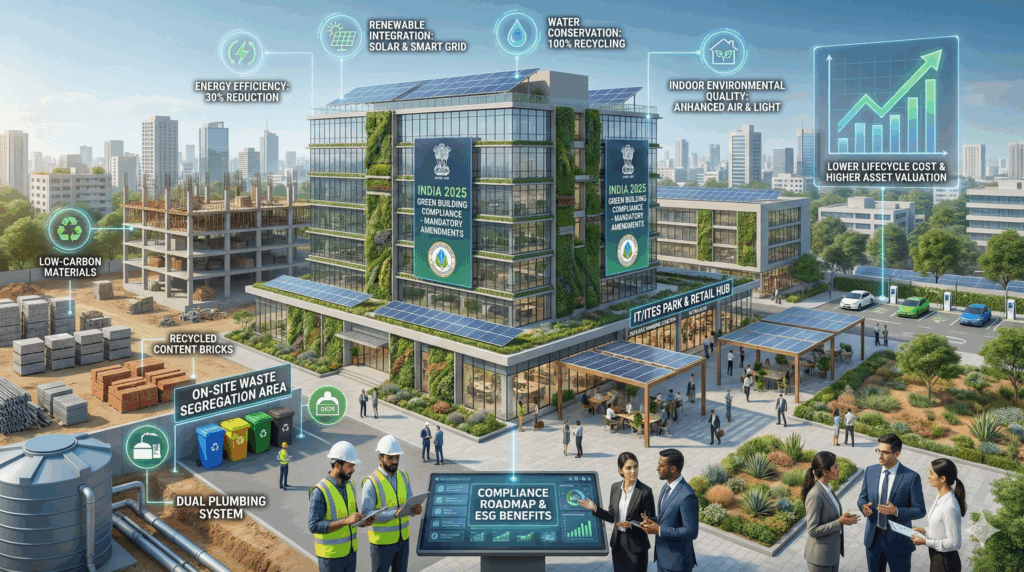
Sustainability has become a defining pillar of India’s built environment, and the 2025 Green Building Compliance Amendments represent one of the most significant regulatory updates for commercial real estate in recent years. As businesses, developers, and investors expand across rapidly growing urban and industrial centers, these amendments aim to reduce environmental impact while driving long-term operational efficiency.
This article explains the major elements of the 2025 amendments, their implications for commercial project development, and what stakeholders should prepare for moving forward.
1. The Shift Toward Mandatory Green Compliance
Earlier sustainability frameworks in India were largely voluntary or semi-mandatory depending on the project category. With the 2025 amendments, a major shift has occurred:
Green compliance is now a mandatory requirement for a wider range of commercial projects, particularly in:
- Office buildings
- IT/ITES parks
- Retail and mixed-use developments
- Hospitality projects
- Warehousing and logistics facilities
- Large institutional buildings
The goal is to ensure that commercial developments are not just energy-efficient but also environmentally responsible throughout their lifecycle.
2. Key Areas Covered Under the Amendments
The 2025 update broadens the scope of mandatory compliance. Some of the most important areas include:
a) Energy Efficiency & Renewable Integration
Commercial buildings must now follow enhanced energy-efficiency norms, including:
- Minimum 20–30% reduction in energy consumption vs. baseline
- Mandatory integration of solar or other renewable systems for part of load
- Smart metering and automated energy monitoring systems
These requirements significantly influence design, material selection, and operational planning.
b) Water Conservation and Management
To address rising water stress in urban centers, the amendments mandate:
- Dual plumbing systems
- On-site wastewater treatment
- 100% rainwater harvesting
- Water-efficient fixtures with low flow rates
For developers, this increases the need for early-stage MEP planning and site infrastructure readiness.
c) Sustainable Construction Materials
The amendments promote low-carbon construction and responsible procurement:
- Minimum percentage of recycled or sustainable materials
- Restrictions on high-embodied-carbon materials unless offset
- Use of fly-ash bricks, low-VOC paints, and eco-friendly finishes
This impacts contractors, material vendors, and construction timelines.
d) Indoor Environmental Quality (IEQ)
Worker well-being and productivity are central to the update. New IEQ requirements include:
- Improved natural lighting and cross-ventilation standards
- Better filtration and indoor air quality targets
- Acoustic comfort provisions
- Strict limits on chemical emissions from building materials
e) Waste Management Framework
Mandatory on-site segregation, recyclable material handling, and construction waste management plans must be documented and verified during approval.
3. How the Amendments Impact Commercial Developers
Higher Initial Planning Requirements
Developers must now incorporate green building provisions during conceptual planning, not after drawings are finalized. This increases collaboration between architects, sustainability experts, and engineers.
Increased Upfront Cost — But Lower Lifetime Cost
Upfront capital expenditure may rise by 3–7%. However:
- Reduced utility expenses
- Lower maintenance requirements
- Improved asset valuation
make the lifecycle cost substantially lower.
Revised Approval Timelines
Since compliance documentation has increased, approval cycles may temporarily lengthen—especially for projects still adapting to the 2025 framework. Proper regulatory planning can prevent delays.
Higher Demand for Third-Party Assessors
Energy auditors, environmental consultants, and green certification professionals play a more critical role than ever—helping minimize non-compliance risks.
Better Market Positioning
Commercial tenants, especially corporates, MNCs, and institutional users, increasingly demand sustainable spaces. Compliant buildings will see stronger leasing potential and long-term value retention.
4. Implications for Investors and Occupiers
Investors
Green-compliant buildings are expected to deliver:
- Higher rental premiums
- Better long-term occupancy
- Lower operational risk
- Improved ESG scores
Occupiers
Businesses benefit from improved indoor comfort, reduced energy bills, and alignment with global sustainability mandates—critical for companies reporting ESG data.
5. How Developers Can Stay Prepared
To meet the 2025 requirements efficiently:
- Integrate sustainability in the conceptual design stage
- Conduct early energy simulations
- Review MEP designs for efficiency
- Prepare compliance documentation well before approvals
- Engage qualified sustainability consultants
- Plan capex to balance compliance-related upgrades
Proactive planning will ensure smooth execution and faster regulatory approvals.
Conclusion
The 2025 Green Building Compliance Amendments mark a significant step forward for India’s commercial real estate sector. While they increase responsibility on developers and project teams, they ultimately create more efficient, resilient, and valuable assets. As sustainability continues to influence global investment and development trends, compliance is no longer an optional advantage—it is a core requirement for long-term success.
