How Industrial Corridors Are Reshaping Land Demand in North India
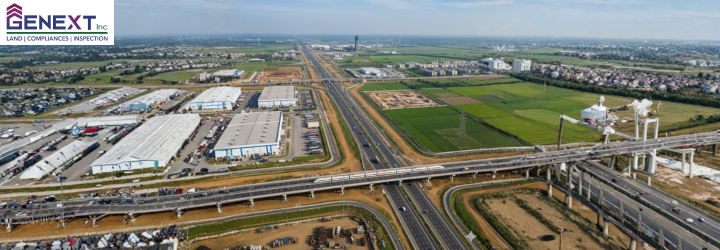
North India has emerged as a strategic hotspot for industrial growth over the last decade. One of the biggest catalysts behind this transformation is the development of large-scale Industrial Corridors—planned zones designed to improve connectivity, boost manufacturing, facilitate logistics, and encourage large-scale investments. With dedicated infrastructure, multimodal connectivity, and integrated industrial townships, these corridors are significantly influencing the way land is identified, aggregated, and acquired for industrial and commercial development.
As India accelerates its push towards becoming a global manufacturing hub, the impact of these corridors on land demand—especially in regions like NCR, Haryana, Rajasthan, and Uttar Pradesh—has become stronger than ever.
This blog explores how industrial corridors are reshaping land preferences, pricing, and development strategies across North India.
1. The Rise of Industrial Corridors in North India
Several major corridors now form the backbone of North India’s industrial ecosystem:
- Delhi–Mumbai Industrial Corridor (DMIC)
- Amritsar–Kolkata Industrial Corridor (AKIC)
- Eastern Peripheral Industrial Belt
- Delhi–Meerut–Haridwar Industrial Development Zones
- Delhi–Amritsar–Katra Industrial Corridor
These mega-projects connect key highways, airports, freight depots, and logistics parks, transforming previously untapped regions into high-value industrial clusters.
2. Connectivity Drives New Land Demand Patterns
Industrial corridors introduce world-class connectivity—including expressways, rail freight networks, and logistics nodes. This dramatically shifts land demand toward locations with superior access and faster movement of goods.
Companies now prefer land that offers:
- Direct access to expressways and dedicated freight corridors
- Proximity to logistics parks, dry ports, and container depots
- Connectivity to multimodal transport hubs
- Reduced travel and transportation time
This shift has led to increasing land demand in micro-markets along the Delhi–Mumbai Expressway, Kundli–Manesar–Palwal Expressway (KMP), Delhi–Meerut Expressway, and NH-48 belts.
3. Emergence of New Industrial Hotspots
Industrial corridors are reshaping geography by creating new high-demand pockets across North India. Regions once considered low-potential are now witnessing rapid appreciation.
Some emerging hotspots include:
- Bhiwadi–Neemrana (Rajasthan): Fueled by DMIC influence and Japanese industrial zones
- Kundli–Sonipat (Haryana): Rising due to KMP expressway and upcoming logistics hubs
- Dadri–Greater Noida (UP): A major node under the Dedicated Freight Corridor (DFC)
- Jhajjar–Pataudi region: Growth driven by large warehousing parks and multinational occupiers
These zones now attract warehousing, FMCG, auto-component, electronics, cold-storage, and e-commerce investments.
4. Faster Movement Toward Land Aggregation
One major shift driven by industrial corridors is the shift from fragmented land buying to large-scale land aggregation.
Developers and corporates now require:
- Large contiguous parcels
- Clear titles
- Faster acquisition timelines
- Ready-to-develop land
- Zoning-compatible locations
Land aggregation has become essential because industries need integrated spaces ranging between 25 acres to 200+ acres for:
- Manufacturing units
- Warehousing clusters
- Logistics hubs
- Data centers
- Industrial townships
Without aggregation, acquiring such large, clean parcels is nearly impossible.
5. Rise in Land Value & Investment Opportunities
With improved connectivity, regions along corridors see:
- Increased land valuations
- Higher investor interest
- Entry of global manufacturing companies
- Growth of support infrastructure (power, water, roads)
This creates a cyclical rise in demand, pushing developers to secure land early before prices peak.
6. Compliance and Approval Processes Becoming More Structured
Industrial corridor zones often come with:
- Pre-notified industrial land
- Faster CLU approvals
- Integrated township regulations
- Environmental pre-clearances in certain zones
This reduces regulatory delays, making these regions far more attractive for large-scale projects.
7. Demand for Warehousing and Logistics Surges
Thanks to India’s booming e-commerce, FMCG, and retail sectors, industrial corridors have become hotspots for warehousing and logistics.
Demand has surged for:
- Grade A warehouses
- Built-to-suit facilities
- Cross-dock logistics centers
- Cold chain warehouses
- Last-mile delivery hubs
North India now contributes a significant share to India’s warehousing absorption, especially in the NCR-KMP belt.
8. What the Future Looks Like
Industrial corridors will continue to reshape land demand as:
- More freight corridors go live
- Policy incentives are updated
- New nodes and clusters are announced
- Large corporates commit to manufacturing expansion
- International companies shift supply chains to India
The next 5–7 years are expected to bring even more value appreciation along these strategic belts.
Conclusion
Industrial corridors in North India are more than infrastructure projects—they are reshaping economic geography. Their influence on land demand is visible in the rise of new industrial hotspots, increased aggregation activity, enhanced logistics connectivity, and a more structured development ecosystem.
For developers, corporates, and investors, understanding these evolving patterns is crucial for making informed, future-ready real estate decisions.
