Environment Clearance: Key Requirements for Real Estate Developers
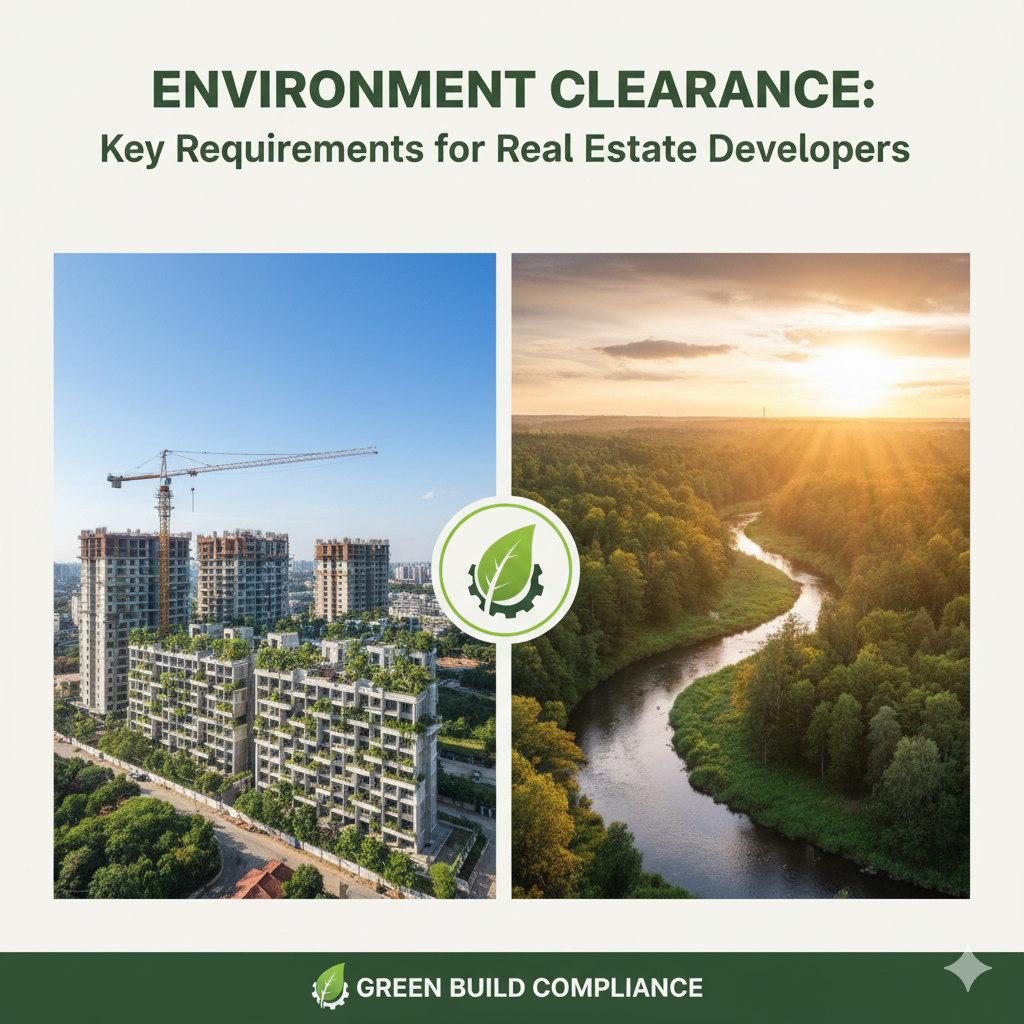
In India’s growing real estate landscape, environmental responsibility has become just as important as financial viability.
Before breaking ground on any large-scale project, every developer must ensure environmental compliance — beginning with Environmental Clearance (EC).
What Is Environmental Clearance (EC)?
Environmental Clearance is a mandatory approval issued by the Ministry of Environment, Forest and Climate Change (MoEFCC) or the respective State Environment Impact Assessment Authority (SEIAA).
It certifies that a proposed project will not cause significant harm to the environment and that it complies with national and state-level environmental regulations.
Why Developers Need Environmental Clearance
Whether you’re developing a housing township, commercial complex, or industrial facility, EC is legally required for most medium to large projects.
Key benefits include:
✅ Legal protection – EC ensures your project aligns with environmental laws and reduces risks of litigation or closure.
✅ Project credibility – Investors and lenders view EC as a sign of compliance and good governance.
✅ Sustainability – The clearance process promotes responsible resource use, pollution control, and green planning.
Projects That Require Environmental Clearance
The EIA Notification, 2006 (as amended) lists categories of projects that require EC before construction.
Some common examples in real estate and infrastructure include:
- Residential projects above 20,000 sq. m built-up area
- Townships and area development projects
- Industrial estates and SEZs
- Infrastructure like highways, ports, and power plants
Depending on the project’s size and environmental impact, it is categorized as Category A (handled by MoEFCC) or Category B (handled by SEIAA).
Key Documents Required for EC
Developers must prepare and submit a comprehensive set of documents, including:
- Form 1 & Form 1A – Application with project and environmental details
- Conceptual Plan – Layout showing land use, green area, water and energy management plans
- Environmental Impact Assessment (EIA) Report – For large-scale projects
- EMP (Environmental Management Plan) – Mitigation measures for air, water, and waste
- NOCs from Pollution Control Board, Fire Department, and Water Supply Agency
- Public Hearing Report – For Category A and select B1 projects
The EC Approval Process
1️⃣ Screening & Scoping – The project is categorized and TOR (Terms of Reference) is issued.
2️⃣ EIA Study – Carried out by an accredited consultant.
3️⃣ Public Consultation – Local communities provide feedback.
4️⃣ Appraisal by Expert Committee – Assessment of the EIA and EMP reports.
5️⃣ Grant or Rejection – Final approval issued with conditions.
Common Challenges Developers Face
- Delays due to incomplete or outdated EIA reports
- Non-compliance with local environmental norms
- Lack of coordination between departments and consultants
Partnering with an experienced regulatory compliance consultant helps developers navigate these challenges effectively — ensuring faster approvals and smoother execution.
Conclusion
In today’s sustainability-driven world, Environmental Clearance is more than a legal obligation — it’s a mark of accountability.
For developers, obtaining EC on time is crucial not just for compliance but also for building trust with investors, communities, and government bodies.
A project that begins with environmental responsibility builds stronger credibility and long-term success.
