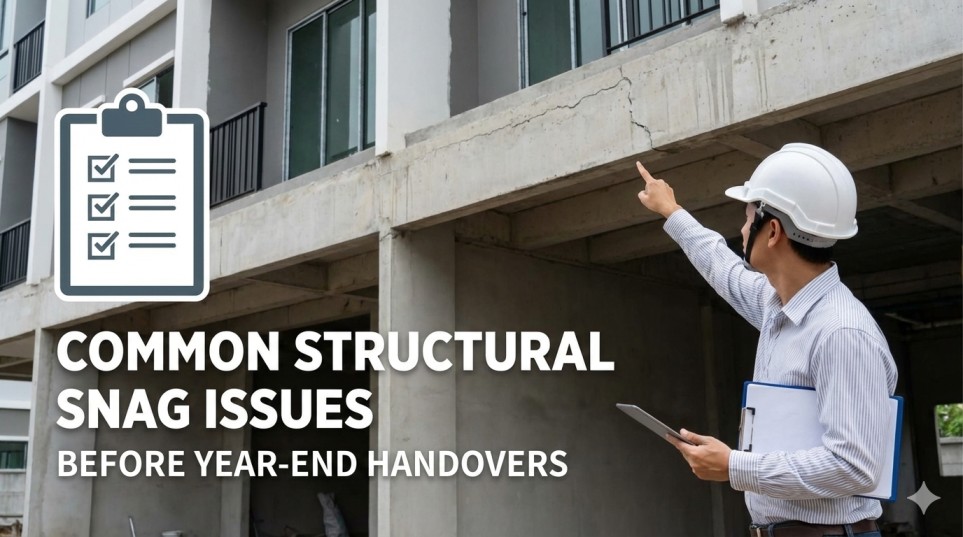
Common Structural Snag Issues Detected Before Year-End Handovers
Year-end handovers are common across residential, commercial, and institutional real estate projects in India. Developers aim to close projects before financial year-end, while buyers and occupiers rush to take possession. However, this compressed timeline often results in structural snag issues being overlooked—issues that can escalate into serious safety, durability, and cost concerns later.
Structural snags are not always visible to the naked eye. Many are embedded within construction systems and become evident only after occupancy or seasonal stress such as monsoons or temperature variation.
This blog highlights the most common structural snag issues identified during pre-handover and year-end inspections, and why addressing them early is critical.
1. Structural Cracks Beyond Surface Level
Not all cracks are cosmetic. Inspections frequently identify:
- Diagonal cracks near beams and columns
- Cracks at slab-column junctions
- Shear cracks near load-bearing walls
These may indicate improper load transfer, shrinkage stress, or design deviations. Left unattended, such cracks can compromise long-term structural integrity.
2. Honeycombing in Concrete Elements
Honeycombing occurs due to:
- Poor compaction during concreting
- Incorrect mix ratios
- Inadequate vibration
It is commonly detected in columns, beams, shear walls, and basement retaining walls. Honeycombing reduces concrete strength and exposes reinforcement to corrosion risk.
3. Improper Reinforcement Placement
Structural inspections often reveal:
- Insufficient concrete cover
- Exposed rebars
- Misaligned reinforcement
Such issues weaken structural members and significantly shorten the building’s lifespan, especially in coastal or high-moisture zones.
4. Slab Deflection and Uneven Levels
Excessive slab deflection or uneven flooring can result from:
- Under-designed slabs
- Overloading during construction
- Poor shuttering practices
These issues affect usability, floor finishes, drainage slopes, and can create long-term serviceability problems.
5. Weak Construction Joints
Cold joints between concreting stages are common year-end findings, particularly where work was rushed. These joints become vulnerable points for:
- Structural weakness
- Water ingress
- Crack propagation
6. Basement Structural Concerns
Basements are among the most critical zones inspected before handover. Common issues include:
- Retaining wall cracks
- Structural seepage
- Inadequate waterproofing affecting structural concrete
Basement repairs post-occupancy are complex and expensive.
7. Staircase and Cantilever Stress Issues
Staircases, balconies, and canopies often show:
- Cracks at junctions
- Deflection in cantilever slabs
- Improper anchorage
These are high-risk elements due to their exposure and load behavior.
Why Year-End Inspections Matter
Year-end inspections allow:
- Identification of structural defects before possession
- Rectification under developer responsibility
- Avoidance of future safety and legal risks
- Protection of long-term asset value
Structural snag rectification post-handover is far more expensive and disruptive.
Conclusion
Structural snag issues are not always visible but can have long-lasting consequences. A professional inspection before year-end handover ensures buildings are safe, compliant, and durable—protecting both occupants and investors.
